

I went looking for one Overseas and came home with another. The one I wanted was the "Everest," the titanium, grey-dialed chronograph with the bright orange accents that Vacheron Constantin released in 2021 and that has since hardened into a grail. I was looking at the Everest when I found this one on Chrono24, and I had to have it. This is the Overseas Chronograph reference 49150/000W-9015, from 2015. Most people would assume it came after the Everest and borrowed the idea. It came six years before. That ordering changes what the watch is. The story usually runs the other way.
Vacheron's first answer to the integrated steel sports watch was the 222, designed by Jörg Hysek in 1977 to mark the firm's 222nd anniversary. The Overseas name arrived later, in 1996. The chronograph came after that: the first Overseas chronograph was the reference 49140 in 1999, replaced in 2004 by the 49150 running the same caliber 1137. The 340-piece limited edition I bought is a 2015 send-off of that second-generation chronograph, with a stainless steel case, a sandblasted titanium bezel, a grey dial, and golden-yellow chronograph hands.
Then came the Everest. In 2021, Vacheron built two limited editions of 150 pieces each, an Overseas Chronograph and an Overseas Dual Time, both based on a titanium prototype that the explorer and photographer Cory Richards wore on Mount Everest in 2019. The Everest editions ran titanium cases, grained grey dials, orange accents, and the in-house calibers 5200/2 and 5110 DT/2, and they sold only on straps. The Richards prototype itself sold for just over $106,000 at auction, proceeds to the National Geographic Society, which tells you how quickly the Everest became the watch everyone wanted.
Look at the two watches side by side and the resemblance is obvious: steel and titanium, a grey dial, a shot of warm color, a sports chronograph with the Maltese-cross bezel cut deliberately rougher than a dress watch would allow. The Everest is the one that made that combination famous. This 2015 reference sketched it first. It's the rough draft that nobody talks about, and the version you can still buy without joining a waiting list.
The market made the case stronger. My titanium Overseas Dual Time, the watch that first showed me how Vacheron balances refinement with grit, once traded around 120 percent of retail before settling back down. This Chronograph rode a bigger wave, peaking near 190 percent over retail before falling. The correction is the only reason it reached me. Prices came down to mortal levels in 2024, and I bought one.
Case and dimensions
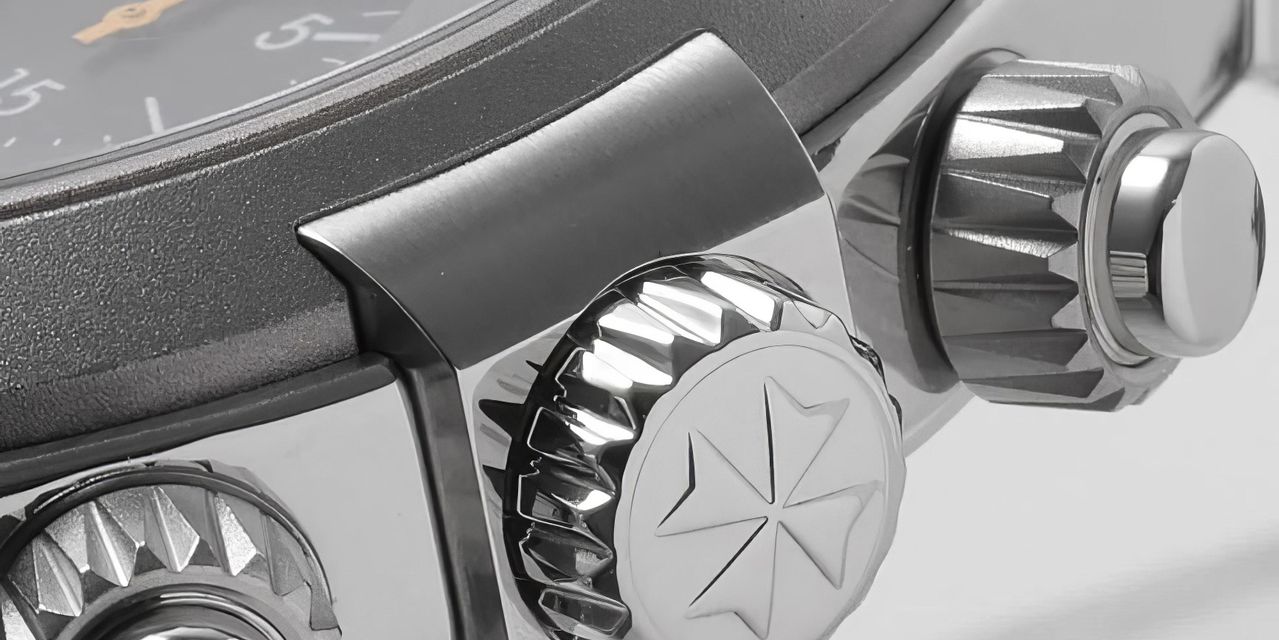
The case is 42mm across, 12.45mm thick, and water resistant to 150 meters. It's built from stainless steel with a sandblasted titanium bezel, a sapphire crystal over the dial, and a closed steel caseback. The crystal in front is the only window into the watch. The back is solid, because the movement sits inside an antimagnetic cage.
The design is Overseas through and through. The six-sided bezel carries the cutouts that echo Vacheron's Maltese cross. The brushed surfaces are broken by polished chamfers that catch the light along the case flank. The lugs flow straight out of the case in the integrated style that the 222 introduced and that every steel Vacheron sport watch has used since. The titanium bezel is the one part that breaks from convention: sandblasted to a flat, matte grey, it sits a shade cooler and harder than the polished steel around it, and it's the first hint that this is the rugged member of the family rather than the dress one.
The proportions are the surprise. A 42mm automatic chronograph should wear like a slab, and this one doesn't. The 12.45mm height keeps it flat enough to slide under a cuff, and the integrated case spreads the weight rather than stacking it. The Overseas looks more delicate than it is. It's a robust case that can go just about anywhere, and the hardware backs that up: 150 meters of water resistance, a solid caseback, and the antimagnetic cage behind it. I wear this watch rather than baby it, and it's taken that without complaint.
The dial
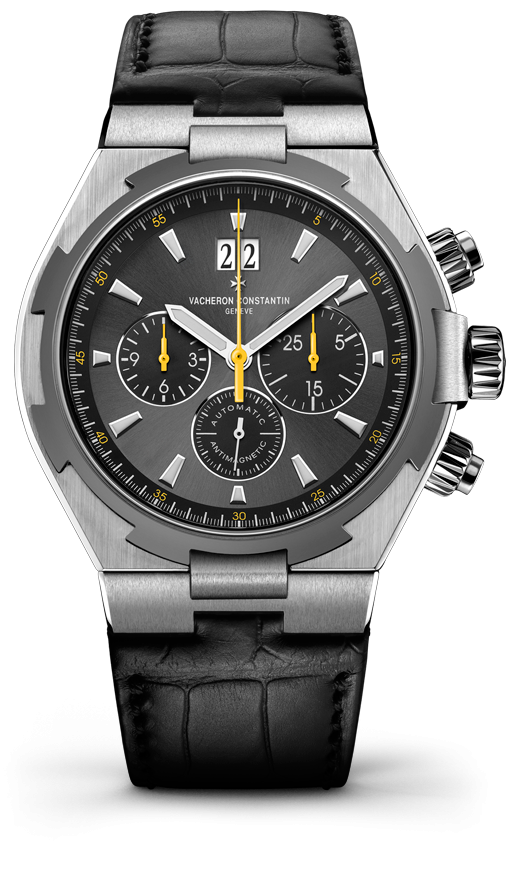
The dial is grey, a sunburst that deepens toward the edges, with three black subdials and a chronograph layout that takes a second to read. The 12-hour chronograph counter sits at 9 o'clock. The 30-minute counter sits at 3. A running small seconds sits at 6, sharing its space with the words AUTOMATIC and ANTIMAGNETIC printed across the register. The applied hour markers are polished steel filled with white luminous material, and the faceted hour and minute hands are filled to match. The colorway, grey with the warm highlights, had appeared before on the Overseas perpetual calendar, so this was Vacheron reusing a known palette rather than inventing one, but on a chronograph it reads as sportier than it ever did on the calendar.
The accent color is golden-yellow. The central chronograph hand and both counter hands are done in it, and the minute numerals around the flange pick up the same shade. It's not orange, whatever the catalogs and the side-by-side with the Everest might suggest. The Everest is the orange one. This is the warmer, more golden version, a saturated amber-yellow that reads as a single deliberate stroke of color across an otherwise restrained dial. Against the grey, it's a harder and cooler combination than orange would be, which suits a watch that's quietly the tool of the line.
The date is the part I expected to dislike and don't. I'm normally not a fan of a date window at 12 o'clock. The placement usually reads as an afterthought, a hole punched where a marker should be. Vacheron got around that by making it enormous. The oversized double window at 12 reads less like a date complication and more like the big date on an A. Lange & Söhne, a deliberate architectural element rather than a compromise. A small date here would have failed. The scale is what turns the placement into a design choice, and it's an interesting one.
The movement
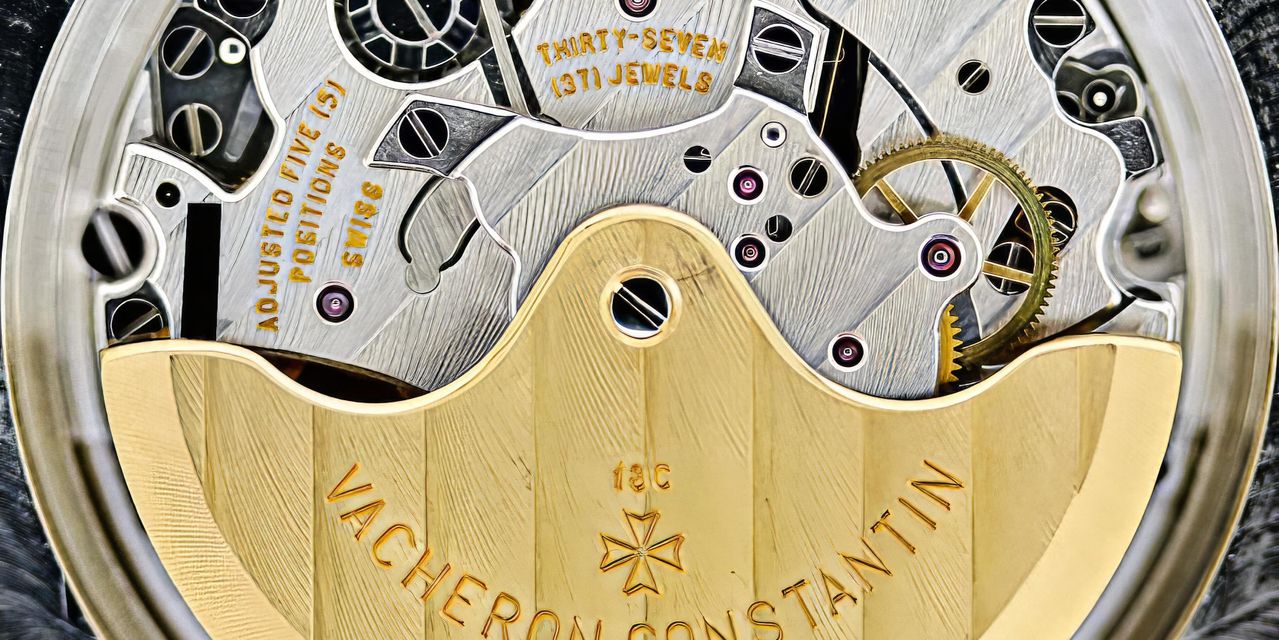
Inside is the caliber 1137, Vacheron's reworking of the Frédéric Piguet 1185, one of the more respected thin automatic chronograph movements in Swiss watchmaking. It beats at 21,600 vibrations per hour, which is 3 Hz, and holds 40 hours of power reserve. It's a column-wheel chronograph, the more refined and more expensive way to control the start, stop, and reset, and in daily use it shows: the pushers are crisp, the date jump is confident, and the subdials stay legible.
The other half of the movement explains the closed caseback. The Overseas chronograph is built around a soft-iron cage that shields the movement from magnetic fields, the same kind of antimagnetic protection that the dial advertises in plain text at 6 o'clock. A Faraday cage and a display back can't coexist, so Vacheron sealed the watch. You don't see the 1137 through the back, and that's the cost of the protection. It's an unusual choice for a watch at this level, where a sapphire caseback is almost expected, and it points the watch toward the tool end of the spectrum rather than the display-piece end.
There's one quirk worth naming, and it's partly mine. When the chronograph is idle, the watch can feel quiet, and I find myself glancing at another clock to be sure it's running. The cause isn't that nothing moves. The running small seconds at 6 o'clock is always turning. The trouble is that it's a thin hand on a black register crowded with text, dark on dark, easy to lose. I have the same reaction to any chronograph without an obvious running seconds. I like to see something in motion. Call it the kid in me. Start the chronograph, and the complaint disappears: the golden-yellow central hand sweeps the dial, the counters begin to fill, and the watch is at its best. That's the moment this dial was designed for.
On the wrist
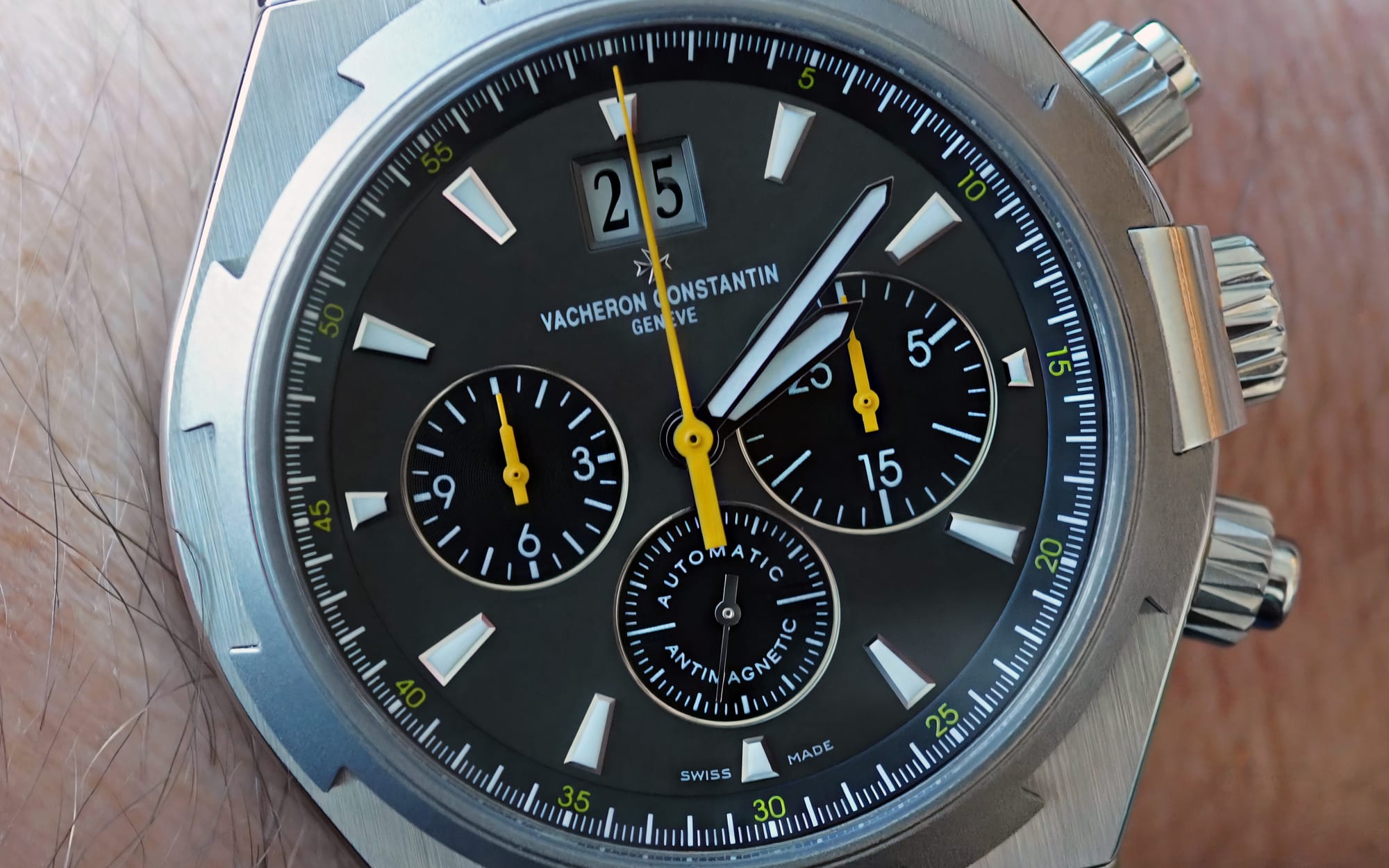
The Overseas surprises me with its comfort every time I put it on. For a 42mm chronograph, the case wears light and flat, and it disappears against the wrist until the clasp scrapes against the edge of my laptop and reminds me that scratches are inevitable. Every clasp I own tells the same story, and on a brushed steel watch the marks simply show. That suits how I use it. This isn't a safe-queen.
The robustness is the thing the wearing experience keeps confirming. The watch looks like a dress-sports piece, all polished chamfers and a Maltese-cross bezel, but it's built like a tool. The closed caseback, the antimagnetic cage, and the 150 meters of water resistance aren't numbers I think about day to day, but they're the reason I don't think about them. The Overseas can take a normal life, and mine is a normal life.
Comparisons
The comparison that matters is the Everest, and the relationship is the opposite of what the resemblance suggests. The Everest Chronograph is a 42.5mm titanium watch on the in-house caliber 5200/2, limited to 150 pieces, sold only on straps, and it's become one of the most sought-after modern Vacherons. It retailed around $37,000 and trades well above that now. It's also six years younger than the watch I bought. The 49150 did the steel-and-titanium, grey-dial, colored-accent idea first, in 2015, at a fraction of the attention. If the Everest is the watch you can't get, this is the one that got there early and is still within reach.
The colors are where the two part company, and where I have to correct my own first impression. The Everest leans orange, including the stitching on its Cordura strap. This 49150 is golden-yellow. The difference is subtle but real, and it shapes the strap hunt. There was no bracelet for this reference. It shipped on a leather strap and a rubber one, and only Cory Richards's prototype Everest ever wore a metal bracelet. So I went looking. I bought the Overseas steel bracelet separately for $1,587, and I bought an Everest strap for $1,865 that looks excellent and never quite fit right. After all of it, the watch probably looks best on the straps it came with, which is the kind of conclusion you only reach after spending the money to disprove it.
The wider comparison is the one the Overseas has always invited. It's the contrarian among the integrated steel sports watches. It's less obvious than the Patek Nautilus and less loud than the Audemars Piguet Royal Oak, and it's spent its whole life as the third name in that conversation. The Chronograph keeps that streak. It's not made to be spotted across a room. It's the steel sports watch for someone who has already owned the famous ones and wants the one that stays quiet.
Final thoughts
To buy this Chronograph, I sold a Rolex Explorer, a Cartier Santos, a Breitling Premier, and an Omega Seamaster. That sounds like a sacrifice, and it wasn't. I fund new watches by selling old ones, full stop. It's the deal I've made with myself, because without it this hobby gets expensive in a hurry. The four that left weren't a price I paid for the Vacheron. They were the currency I paid in, and the discipline is what keeps the collection from running away from me. I have more where those came from.
What I bought, in the end, is the quieter half of a story everyone else tells loudly. The Everest is the celebrated Overseas, the titanium one with the orange accents and the auction history and the waiting list. This is the one that ran the same idea six years earlier, in steel, with a sandblasted titanium bezel and golden-yellow hands, and that you can still find on the open market once the fever breaks. It's robust where it looks delicate, restrained where the Nautilus and the Royal Oak are loud, and built to be worn rather than locked away.
I wear it rather than baby it. The case takes the scratches, the chronograph sweeps its golden-yellow hand when I press the pusher, and most days I'm glad I went looking for the watch I couldn't get, because it led me to the one I could.


