

A watch that tries to do everything usually does nothing especially well. The Omega Seamaster Aqua Terra 150M, reference 220.12.41.21.03.009, is the exception that has kept the line popular for two decades: dressy enough for a jacket, tough enough for a swim, and accurate enough to stop thinking about.
This particular one carries a name. It is a special edition for Armand 'Mondo' Duplantis, the Swedish pole vaulter who has spent the last few years lifting his own world record a centimeter at a time. Omega kept the standard Aqua Terra and dressed it in Sweden's blue and yellow: the same do-everything watch, wearing a flag.
First impressions and design
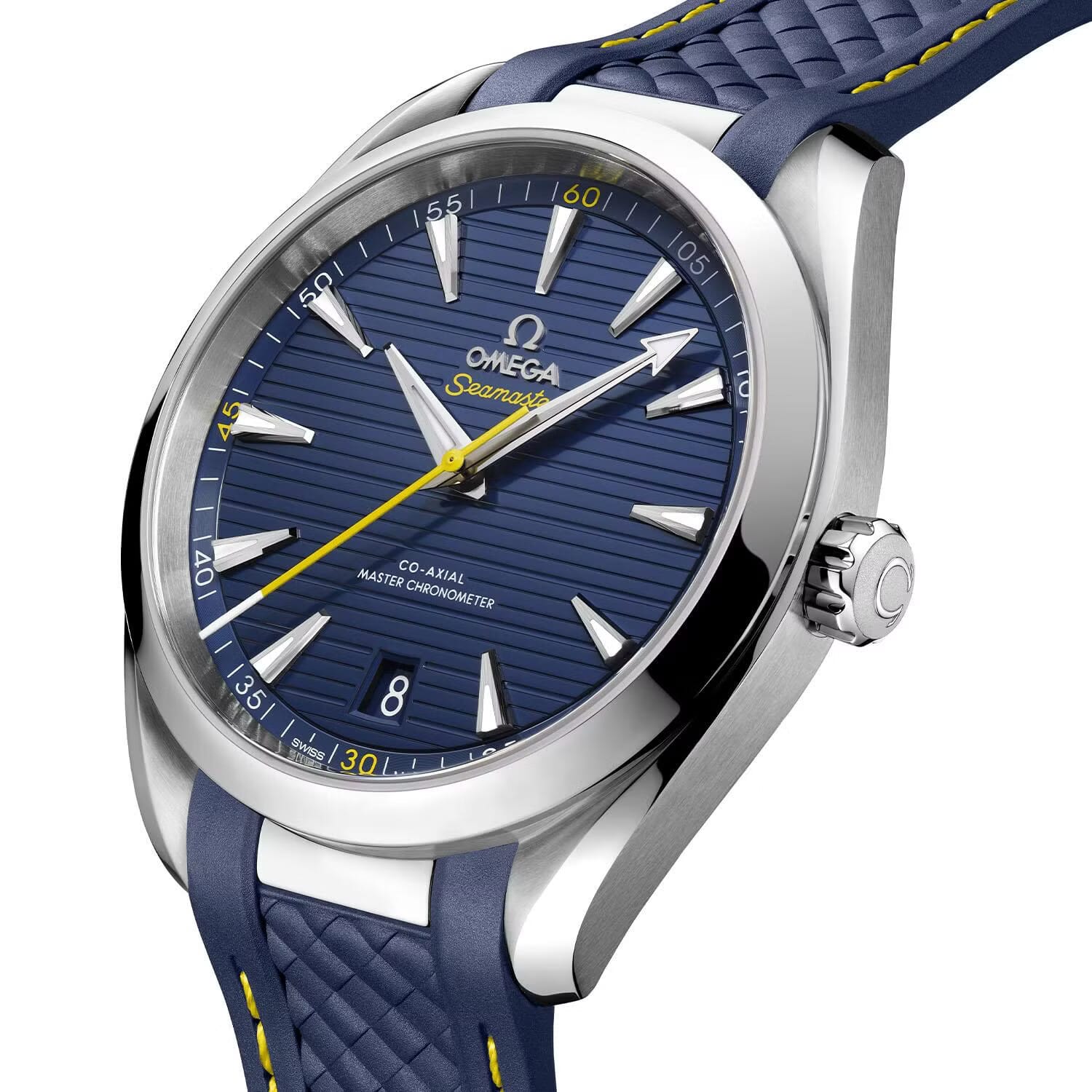
Right out of the box, the blue opaline dial is the draw. Most Aqua Terra models have a sunburst finish, but this one has a soft matte texture and a more understated look. The horizontal teak pattern, borrowed from yacht decks, adds depth, while the yellow accents on the seconds hand, the 'Seamaster' text, and the quarter-hour markers add sporty contrast.
At 41mm, the stainless steel case hits a sweet spot for wrist presence. The finishing mixes brushed and polished surfaces, and at 108 grams it has just enough weight to feel solid without being bulky.
The blue rubber strap with yellow stitching is another highlight. Some rubber straps need a break-in period, but this one is soft and comfortable immediately.
How it wears
The Aqua Terra series is known for comfort, and this one is no different. The 41mm case and 47.9mm lug-to-lug fit well on most wrists. At 13.2mm thick, it has some presence but still slides under a cuff.
Omega's twisted lyre lugs help the watch sit naturally on the wrist, and the rubber strap molds to your wrist immediately. If you prefer a dressier look, you can swap it for Omega's steel bracelet (sold separately).
The weight is well balanced, so it never feels top-heavy, and it stays comfortable for all-day wear.
Durability and water resistance
Despite the elegant looks, the watch is built for daily wear. It is water resistant to 150 meters, fine for swimming, with a screw-down crown and a domed sapphire crystal that carries anti-reflective coating on both sides for a clear read. Some buyers will want a ceramic bezel, but the polished steel bezel keeps the watch versatile across casual and formal settings.
Dial and legibility
The blue opaline dial is the reason to pick this watch over a plainer one. Where most Aqua Terras get a sunburst, this one is soft and almost frosted, and the horizontal teak pattern, lifted from the planking of a yacht deck, gives it a depth that shifts as the light moves. It is the rare textured dial that adds interest without shouting.
The Swedish-themed yellow details are subtle but well-executed. The yellow seconds hand, strap stitching, and "Seamaster" text add just enough color without feeling overdone.
Legibility is excellent. The rhodium-plated hands and markers are filled with white Super-LumiNova for low light, the date window at 6 keeps the dial symmetrical, and Omega's anti-reflective coating reduces glare in direct sun.
Movement and performance
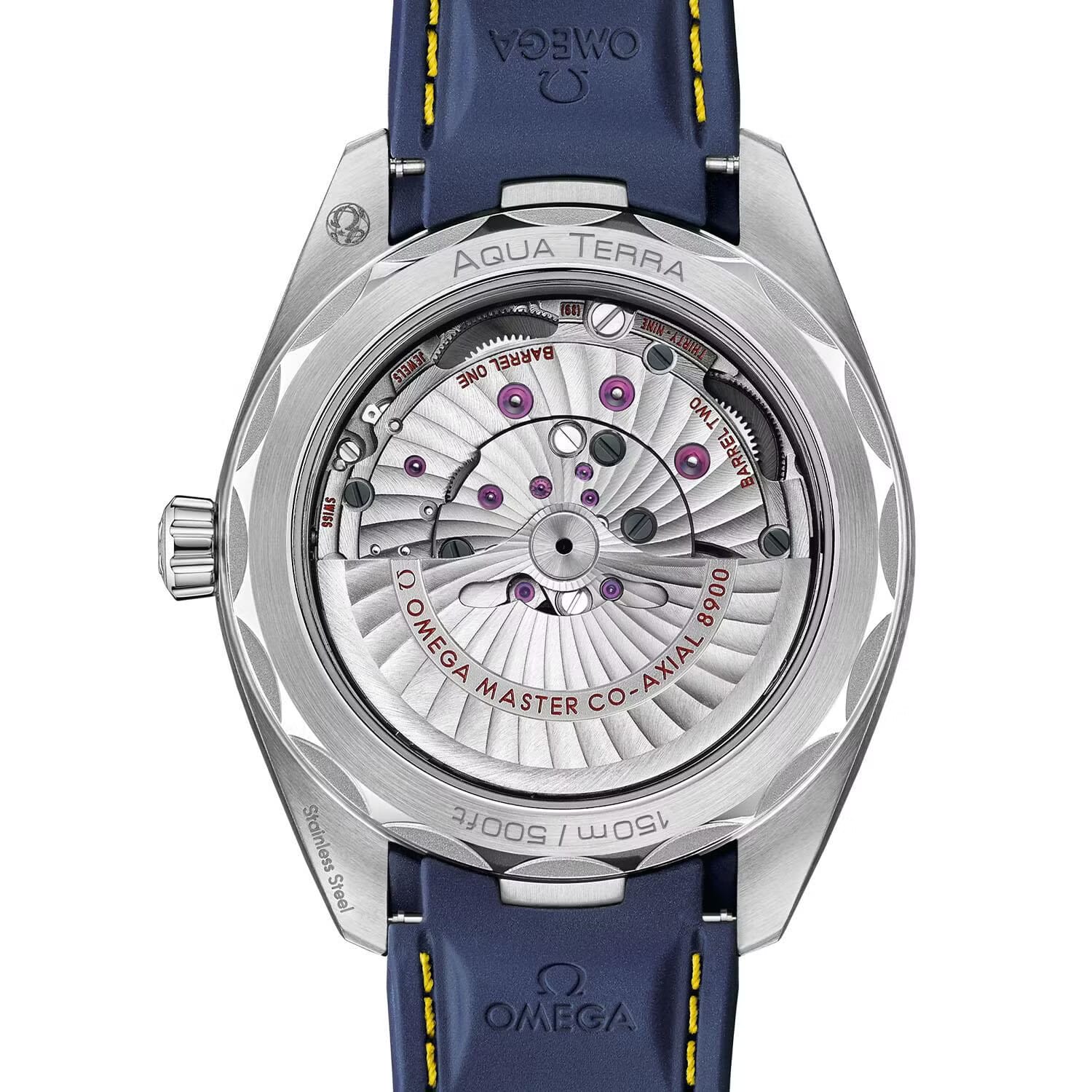
Inside is Omega's Co-Axial Master Chronometer Calibre 8900, and it is the part that earns the price. It is METAS-certified, which means it is tested not just for accuracy but for surviving 15,000 gauss, a magnetic field that would stop most mechanical watches dead. It runs a Co-Axial escapement, a 60-hour reserve from twin barrels, and a 3.5Hz beat.
Over a week on my wrist it ran +2 to +3 seconds a day, well inside COSC and METAS limits. The hour hand sets independently, which helps when traveling, and through the sapphire caseback you can see the Geneva-wave finishing.
Strap and comfort
Omega's structured rubber strap is one of the best in the industry: soft, flexible, and ready to wear with no break-in. The yellow stitching adds a sporty touch without being loud, and the foldover clasp is sturdy and secure. If you want a different look, the Aqua Terra takes Omega's steel bracelet, bought separately.
Comparisons and alternatives
If you're considering the Aqua Terra, a few alternatives are worth a look. The Rolex Datejust 41 is more of a dress watch and costs noticeably more. The Grand Seiko SBGA413 has a stunning Spring Drive movement and dial work but less water resistance and durability. The IWC Ingenieur is a solid alternative but doesn't match Omega's METAS certification and anti-magnetism.
Put simply, for a sports watch that refuses to specialize, the Aqua Terra is very hard to beat.
Final thoughts
At $6,300 the Aqua Terra is not cheap, but the movement alone goes a long way toward justifying it, and the rest, the finishing, the comfort, the go-anywhere versatility, is what you actually live with.
That is the case for the Aqua Terra in general. The case against this one is small and personal: the blue-and-yellow Mondo theme is specific, and a neutral dial would wear easier for most people. But if you want a single watch that handles a suit, a pool, and an ordinary Tuesday, with a movement that shrugs at magnets, this is still one of the best ways to spend the money, blue-and-yellow paint job or not.


