

There's a moment when you see a watch in person that you've been pretending you don't want. It's usually quiet, like running into an ex you still have feelings for. You try to act casual. You pretend it's just curiosity. And then it's on your wrist and you realize the pretending is over. That was the BigEye for me.
I'd seen the photos. I'd heard Andrew McUtchen on About Effing Time say this was one of the best watches out there for the money. But I already owned a couple pieces from the Avigation line and thought, Do I really need another one? (Which is the dumbest question a watch person ever asks.) Then I saw it (that gradient petrol blue dial, the titanium case, the weirdly oversized subdial staring back like HAL 9000) and it was game over.
Design
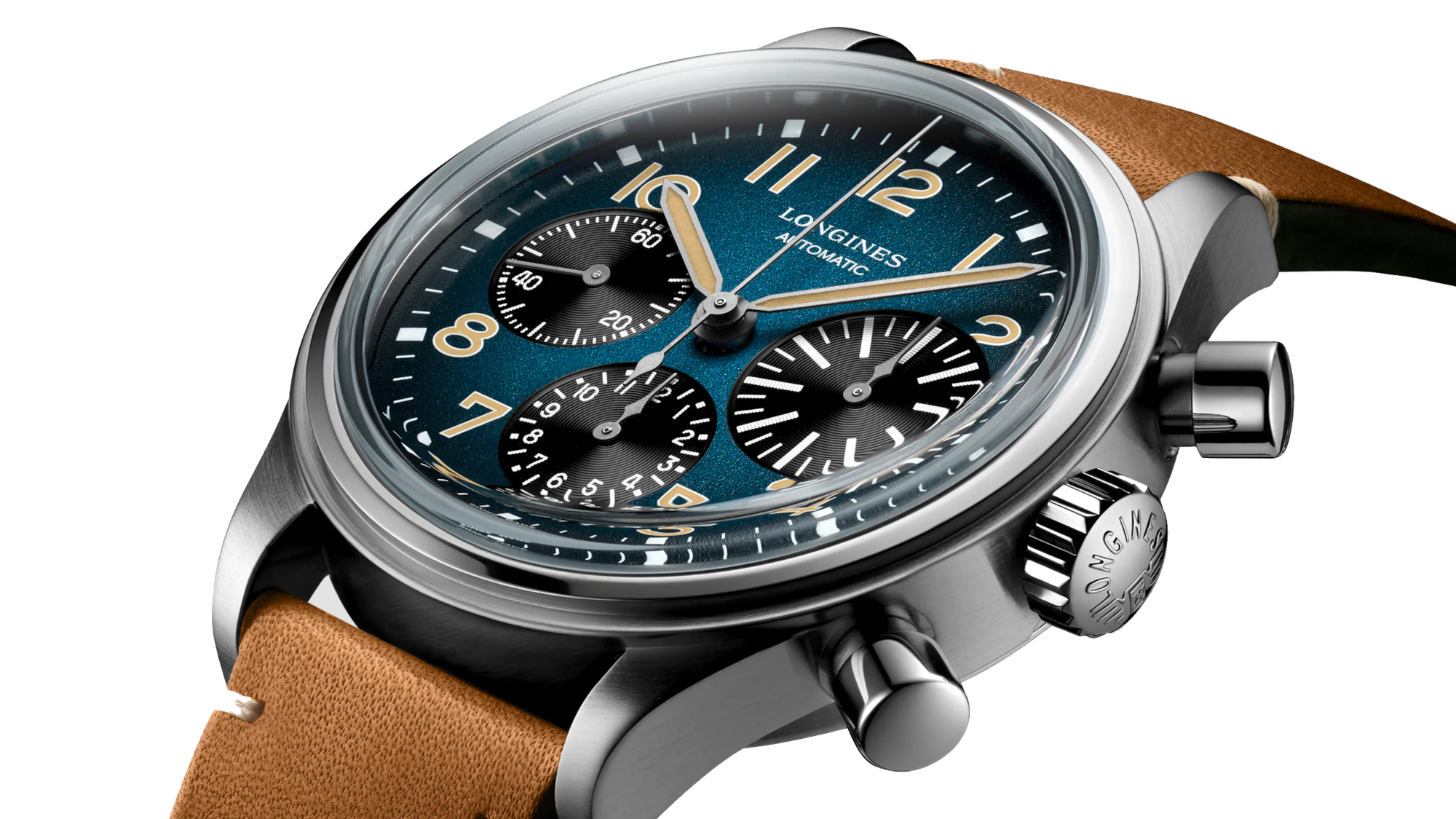
So here's what you're looking at: a 41mm titanium case, brushed to a soft matte sheen that catches just enough light to look expensive without shouting. The dial shifts from dark navy to steel gray to a desaturated blue that doesn't photograph the way it looks in real life, and that's part of the appeal.
The beige Arabic numerals and matching lume on the syringe hands lean vintage but never cartoonish. No bright whites, no green Super-LumiNova glow, just a warm tone that plays well with the blue, like parchment against denim. The chronograph seconds hand is white, which adds just enough contrast to keep things readable.
And of course, the Big Eye itself. The oversized 30-minute counter at 3 o'clock that gives the watch its name and its personality. It's not symmetrical, and that's the point. It's a design decision that breaks the mold gently, like a jazz note that sounds wrong until it's followed by the next one.
There's no faux patina, no fake distressing. Just a design that feels found rather than made, which, funny enough, is kind of what happened.
Uncertain origins
Unlike most heritage reissues, this one didn't come from Longines' archives. A collector presented the original 1930s chronograph to the brand: it wasn't cataloged, wasn't documented, wasn't even confirmed to exist. Longines looked at it and basically said, "Yeah. We're doing this." So the BigEye isn't so much a reissue as a horological reboot: a found object turned fully modern, but with the soul of something that saw real time pass.
Movement
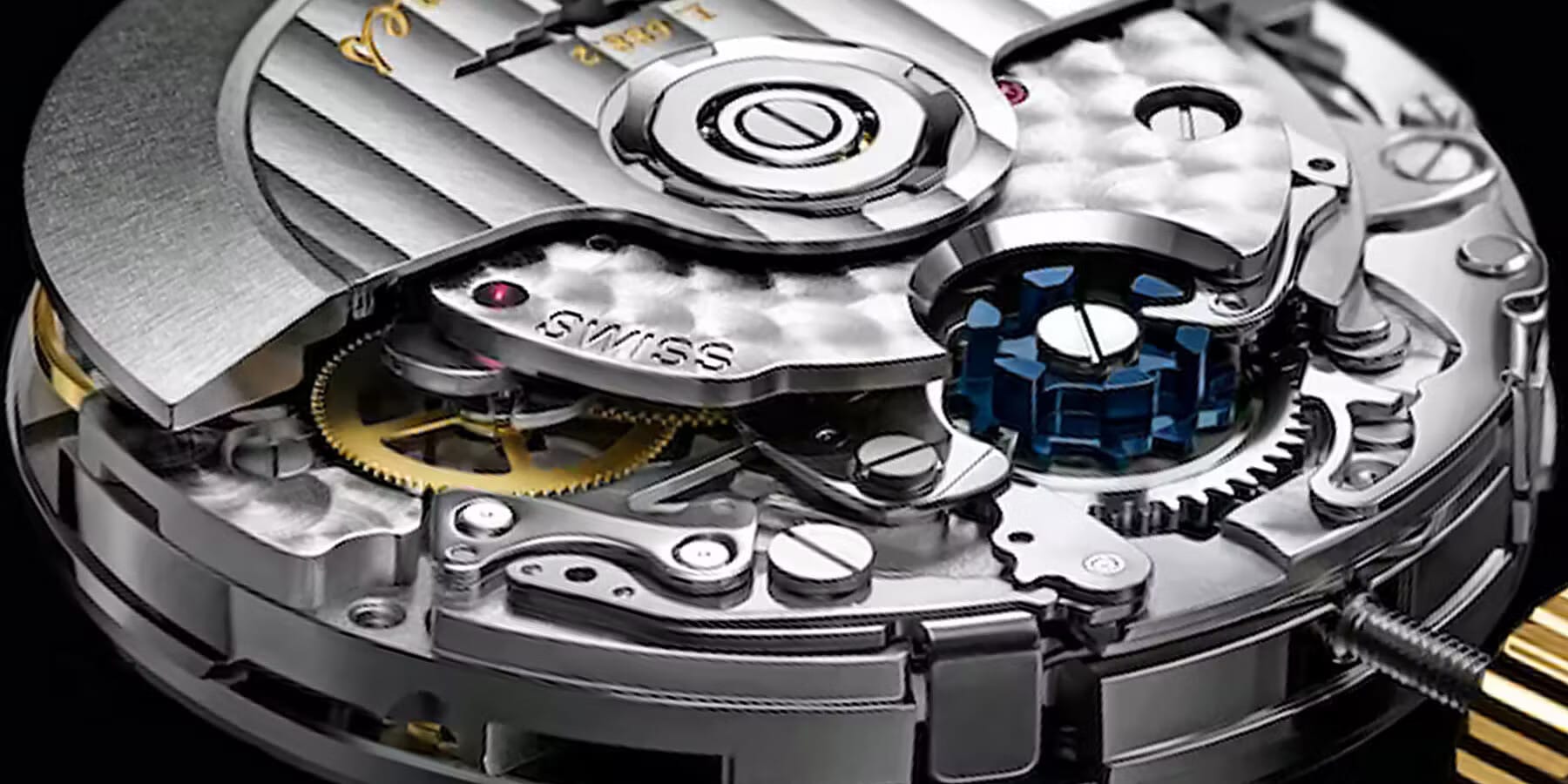
Inside is the Longines Caliber L688, a column-wheel chronograph movement with 54 hours of power reserve and a silicon balance spring. Translation: this is not some off-the-shelf compromise. The pushers have the kind of tactile snap you get in higher-end chronographs.
And yes, the column wheel matters. It makes the operation smooth. It makes the chronograph something you actually want to use. I've used mine to time boiling pasta, meditation sessions, and once, unintentionally, how long I zoned out thinking about 4D geometry.
Wearing experience
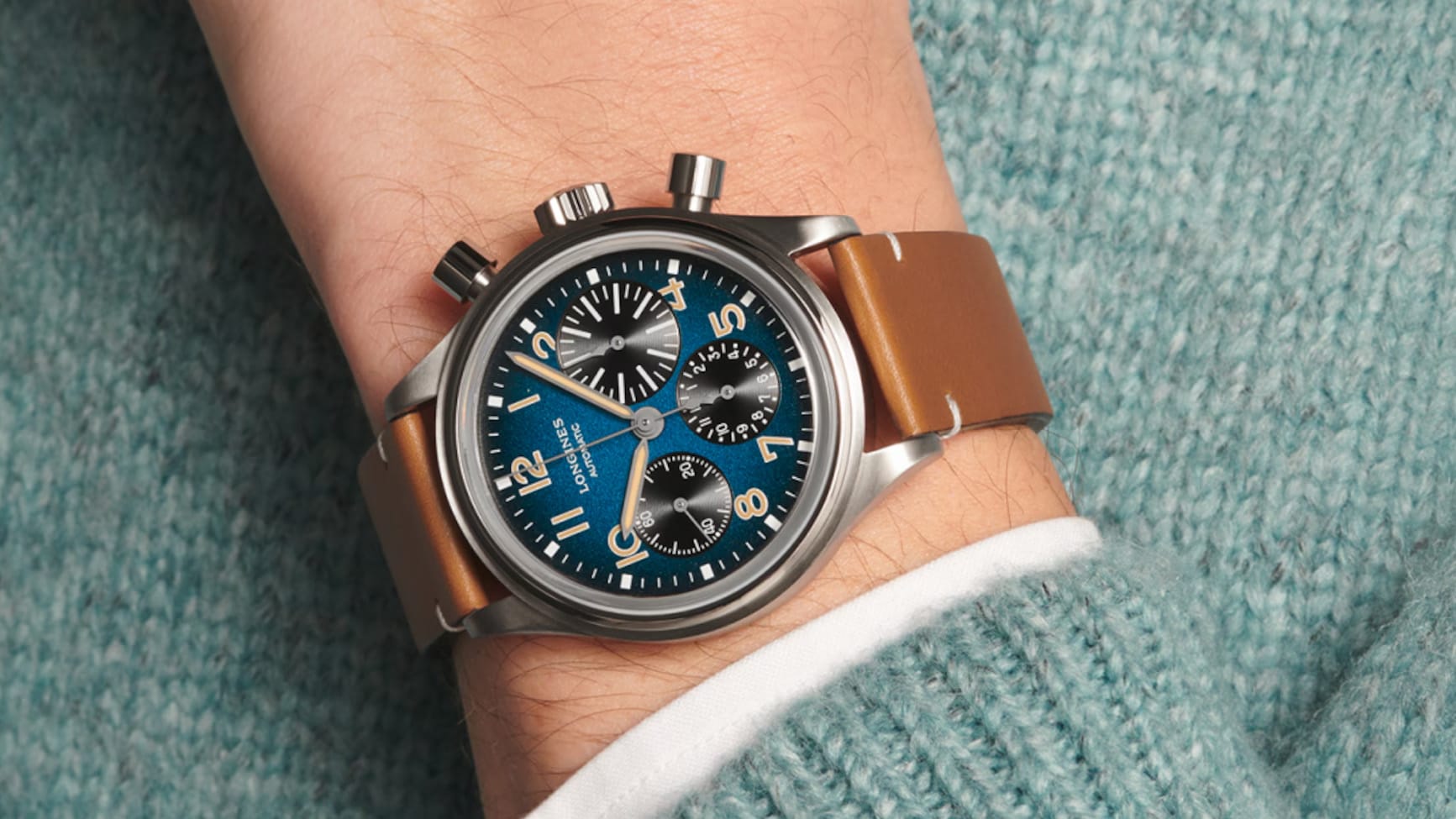
Titanium makes a difference here. It's light, like weirdly light, to the point that you forget it's a chronograph. The case hugs the wrist, the leather strap breaks in fast (even if you swap it out, which I did), and the whole package just disappears until you look down and remember why you bought it.
There's something understated about the BigEye. It doesn't beg for attention, but it gets noticed. I've had more people ask about this watch than anything else in my rotation. Maybe it's the dial. Maybe it's the way it refuses to look like everything else. Or maybe, and I'm just going to say it, it's because it looks like it knows something you don't.
A pioneer's legacy
Longines, as a brand, has always operated a little differently. Founded in 1832 in a remote Swiss valley, they didn't just build watches, they built a watchmaking culture from scratch. No electricity, no roads, no connection to the outside world. Just a vision and a lot of hard winters.
Auguste Agassiz and his nephew Ernest Francillon defined Swiss precision at a time when no one knew what that meant. Francillon's factory at Saint-Imier, the "longs prés," gave Longines its name and its soul.
By the early 20th century, Longines was pushing past timekeeping. First high-frequency chronographs, the first flyback chronograph, the first wristwatch with a rotating bezel. They were timing horse races, air races, and Olympic events long before most people even owned a wristwatch. The BigEye came out of that history, out of a mountain valley where people tried to solve time with gears and springs and hands.
Final thoughts
The BigEye is weird in the best way. It looks good without trying too hard and feels vintage without being nostalgic.
This isn't a watch you buy because you want to complete a collection. It's the one you buy because something about it stuck with you, like a picture of a watch from 1930 that no one can quite explain.


