

In 2021, Tudor quietly discontinued the North Flag after six years. By the numbers it was the right call. The watch never sold like the Black Bay, and its industrial case and mustard-yellow accents split the room. But the North Flag is the watch that taught Tudor it could stand on its own, which makes it more important than most of the watches that outsold it.
The Tudor legacy
Hans Wilsdorf founded Tudor in 1926 as the watch you bought when you wanted a Rolex you could actually afford. For most of its history that meant the same rugged cases as its parent, wrapped around third-party movements, mostly ETA. Soldiers wore them. Navy divers wore them. The watches were tough and reliable and, in a sense, borrowed: Tudor designed the outside and bought the inside.
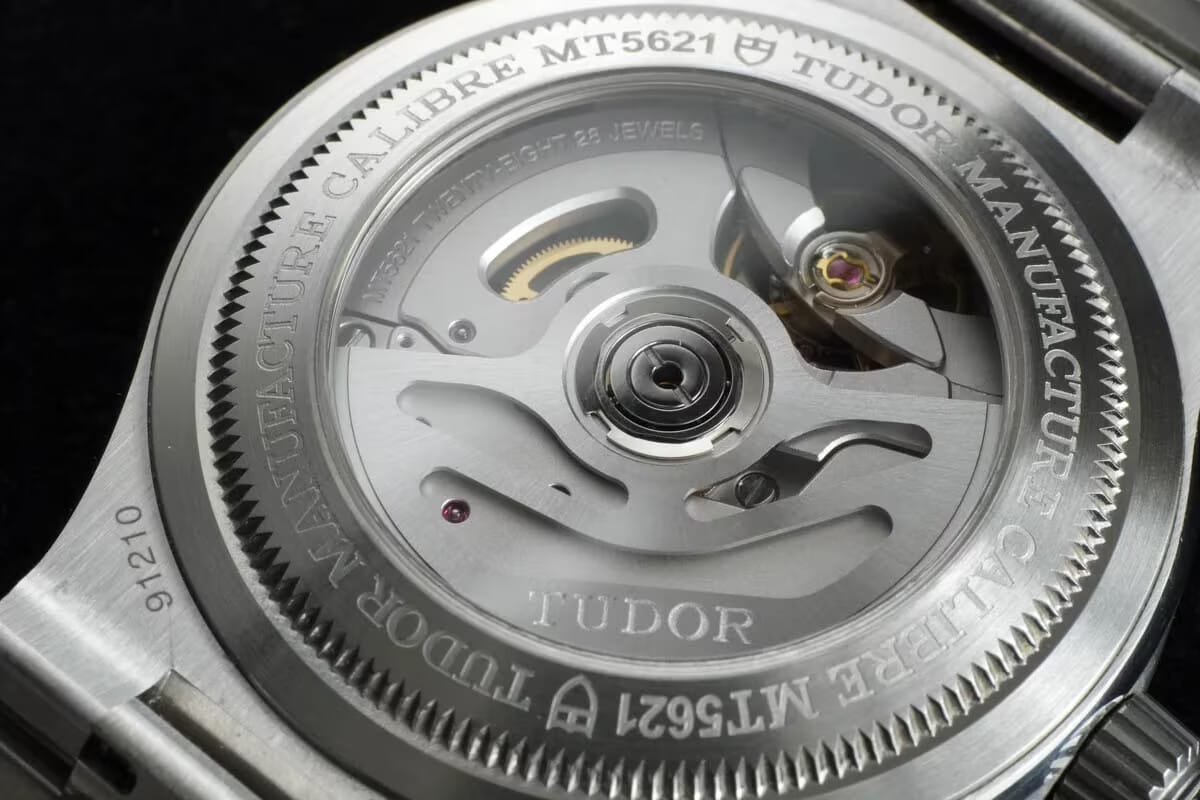
That changed slowly, then all at once. The Heritage line revival in 2012 reminded people Tudor still made interesting watches at sane prices. Then, in 2015, reference 91210N did something Tudor had never done: it carried the brand's first in-house movement, the MT5621. For a company that had spent ninety years assembling other people's parts, this was the moment it built the whole watch itself. The North Flag was the proof of concept, and Tudor knew it.
Why Tudor went in-house
Going in-house did two things for Tudor. It ended the brand's dependence on Rolex and ETA for calibers, and it let Tudor compete with Omega and Breitling, both of which already built their own movements at similar prices. The MT5621 answered a question Tudor had been ducking for decades: could it make the part that actually keeps time?
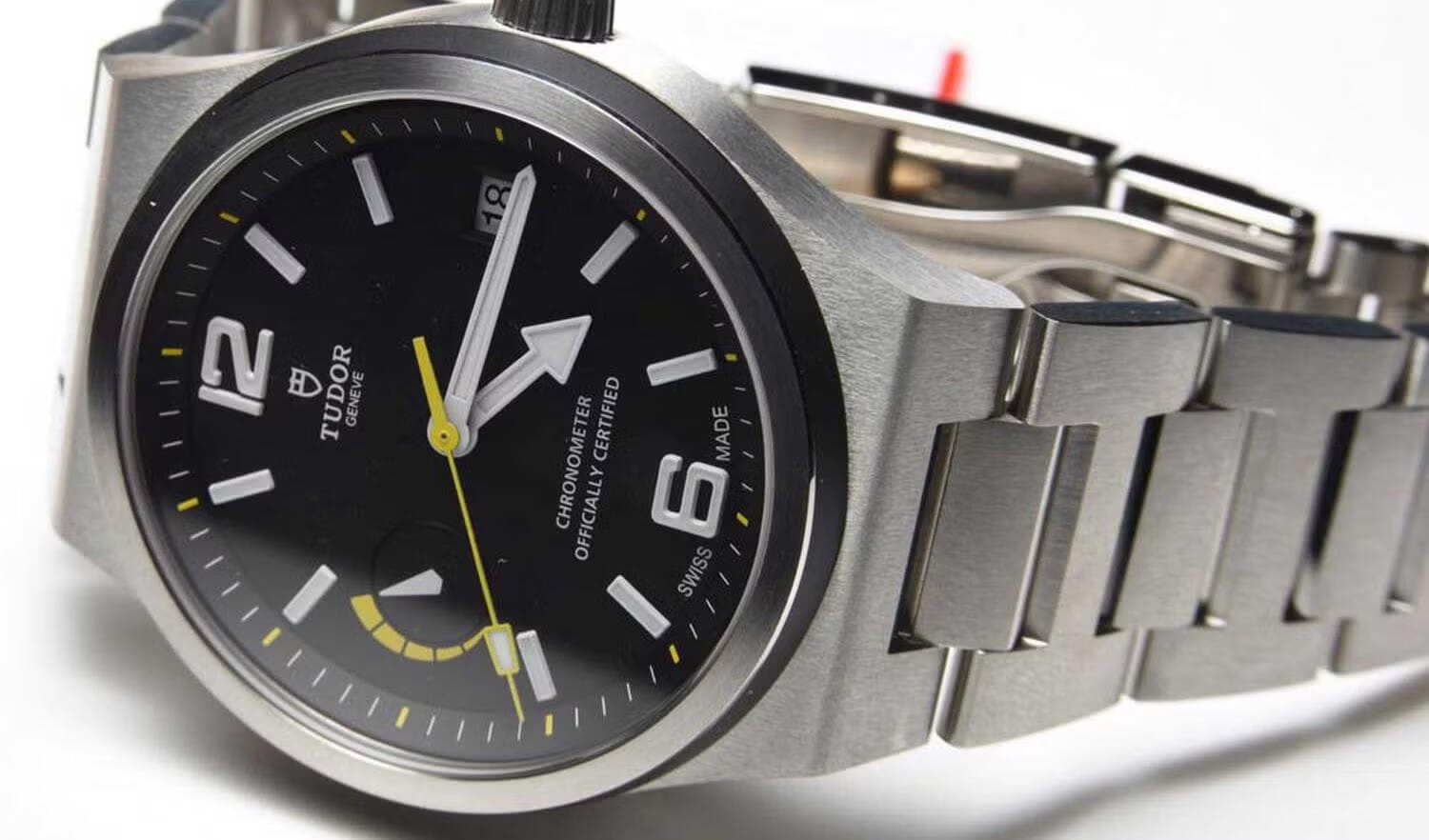
The answer was yes, and then some. The MT5621 runs a 70-hour power reserve, where most ETAs give you about 40, and a silicon hairspring for magnetic resistance. It also drives a power reserve indicator at 9 o'clock, the kind of detail you rarely see at this price.
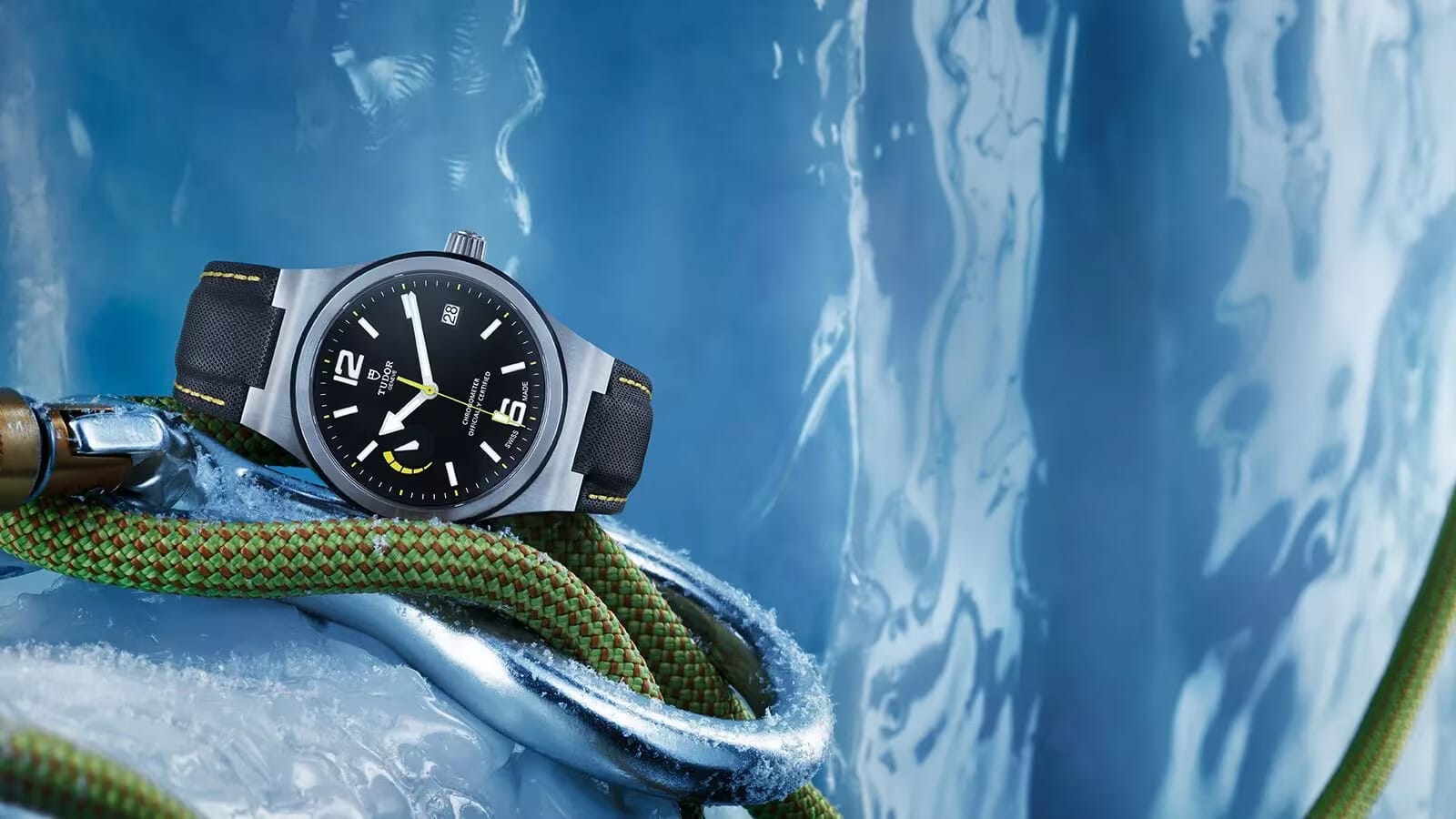
Hold the North Flag and the cohesion is obvious. The case, dial, bracelet, and movement were drawn for this one watch, not adapted from a parts bin, and it shows in the way the bracelet flows out of the case and the dial sits under the box-shaped crystal. Nothing about it feels borrowed.
Why Tudor pulled it
Tudor killed the North Flag in 2021, and the timing surprised people given what the watch had meant to the brand. There is no official explanation, but a few reasons are easy to guess.
The design split opinion. The industrial case and yellow accents were never going to outsell the warm, vintage-inspired Black Bay, which remains Tudor's center of gravity. The integrated bracelet and ceramic bezel almost certainly cost more to build than the Black Bay's simpler parts, though Tudor has never confirmed it. An experiment that divides the room and costs more to make is an easy one to retire.
Whatever the reason, six years is a short life, and short lives make watches collectible. The North Flag was an experiment, and experiments do not always get to grow old.
Technical details
Movement: MT5621
- COSC-certified chronometer
- 70-hour power reserve (a full weekend off the wrist)
- Silicon hairspring for magnetic resistance
- 28,800 vph (4 Hz)
- Power reserve indicator at 9 o'clock
Case and dimensions
- Brushed stainless steel with polished accents
- 40mm diameter
- 13mm thick
- Brushed steel bezel with ceramic insert
- Sapphire crystal with anti-reflective coating
- Exhibition caseback (another first for Tudor)
- 100m water resistance
Bracelet
- Integrated design that flows into the case
- Folding clasp with safety catch
Swapping straps is a small annoyance: the 12mm spring bars scratch easily. But the watch looks right on both the steel bracelet and the black-and-yellow leather strap, so you will probably want both. The yellow accent is polarizing. I like it. It gives the watch an expedition-instrument character that the rest of the Tudor catalog plays much safer with.
When I first handled the North Flag, I understood immediately why people get attached to it. It was the first and only Tudor I've owned.
Collectibility
This is why the North Flag matters. Before 2015, Tudor was a parts-assembler with a famous surname. After it, Tudor could point at a movement, a caseback, a whole watch, and say: we made this.
Collectors also tie it to Tudor's exploration past, specifically the Oyster Prince watches issued to the 1952 British North Greenland Expedition. Tudor never marketed the link, but the rugged, go-anywhere DNA runs straight through.
Bottom line
The North Flag never outsold the Black Bay or the Pelagos, and the industrial look was never going to. But it gave Tudor three firsts that mattered more than sales: its first in-house movement, its first exhibition caseback, and the nerve to make something that looked like nothing else in the lineup.
If the design speaks to you, track one down. Production ended in 2021, and on the secondary market a clean one now costs more than it did new.


