

I found this watch at a dealer in London. It wasn't what I went looking for. The dial stopped me: white field, black and red subdials split down the middle. Despite a production year of 1970, the condition was excellent, so I bought it.
The Soccer Timer exists because someone at Omega in the late 1960s decided referees needed a wristwatch. A soccer match runs two 45-minute halves. Standard chronograph subdials mark 30 minutes. The solution was simple: add a "45" below the 30-minute marker. That's it. That's the whole modification. Everything else is Seamaster chronograph, dressed up in colors that only the 1970s could love.
The three references
Omega produced three Soccer Timer references under the Seamaster line from 1968 through the early 1980s. All used the caliber 861 in cushion cases.
- The 145.016 came first: 38mm, no internal bezel, dial reaching the full width of the case opening. It wears smaller than modern tastes but looks right for the era.
- The 145.019 added a rotating internal bezel controlled by a second crown at 10 o'clock. Some came with the "roulette" bezel in red, white, and blue for tracking a second time zone. Collectors pay the most for these.
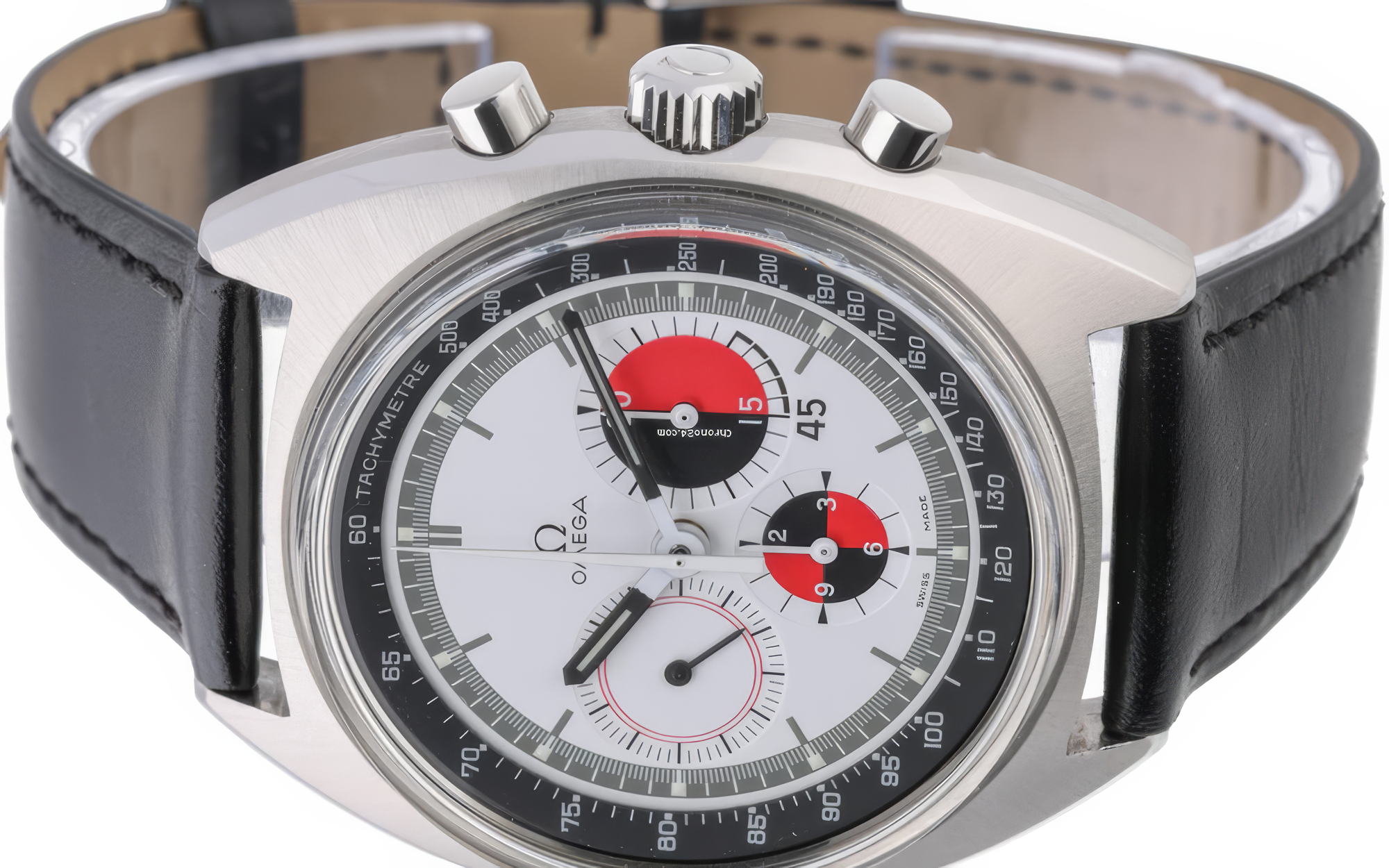
- My watch is the 145.020: 41mm case, fixed internal tachymeter bezel, no second crown. It sits between the simplicity of the 016 and the complication of the 019.
The dial
The subdials split into halves. At 3 o'clock, the 30-minute counter divides black and red, with "45" marked below 30 in red numerals. At 6 o'clock, the 12-hour counter mirrors the treatment. At 9 o'clock, the running seconds gets a red ring around the track. None of this is subtle.
Original dials develop a greenish or warm patina from the tritium lume. Mine hasn't. The white is still white. The lume plots show no discoloration. At some point in the 1980s or 1990s, someone had this dial replaced during a service. I'm guessing. Omega service centers did this routinely for decades, and many owners didn't object. A fresh dial meant a watch that looked new.
Some collectors would walk away from a service dial. I didn't. The colors are correct, the printing is sharp, and the watch was priced accordingly. A perfect original dial would cost more and come with more anxiety about preservation. I wanted to wear this one.
The case
Forty-one millimeters in a tonneau shape that Omega called a cushion case. The top surface is brushed horizontally, with polished bevels on the sides that catch light. The lugs don't stick out like a normal watch. They're integrated into the case, swooping down toward the strap in one continuous curve. Two chronograph pushers flank the crown on the right side, all three polished.
I'm not usually drawn to this case shape. It doesn't look like the tool watches I normally wear. But the dial won me over.
The movement
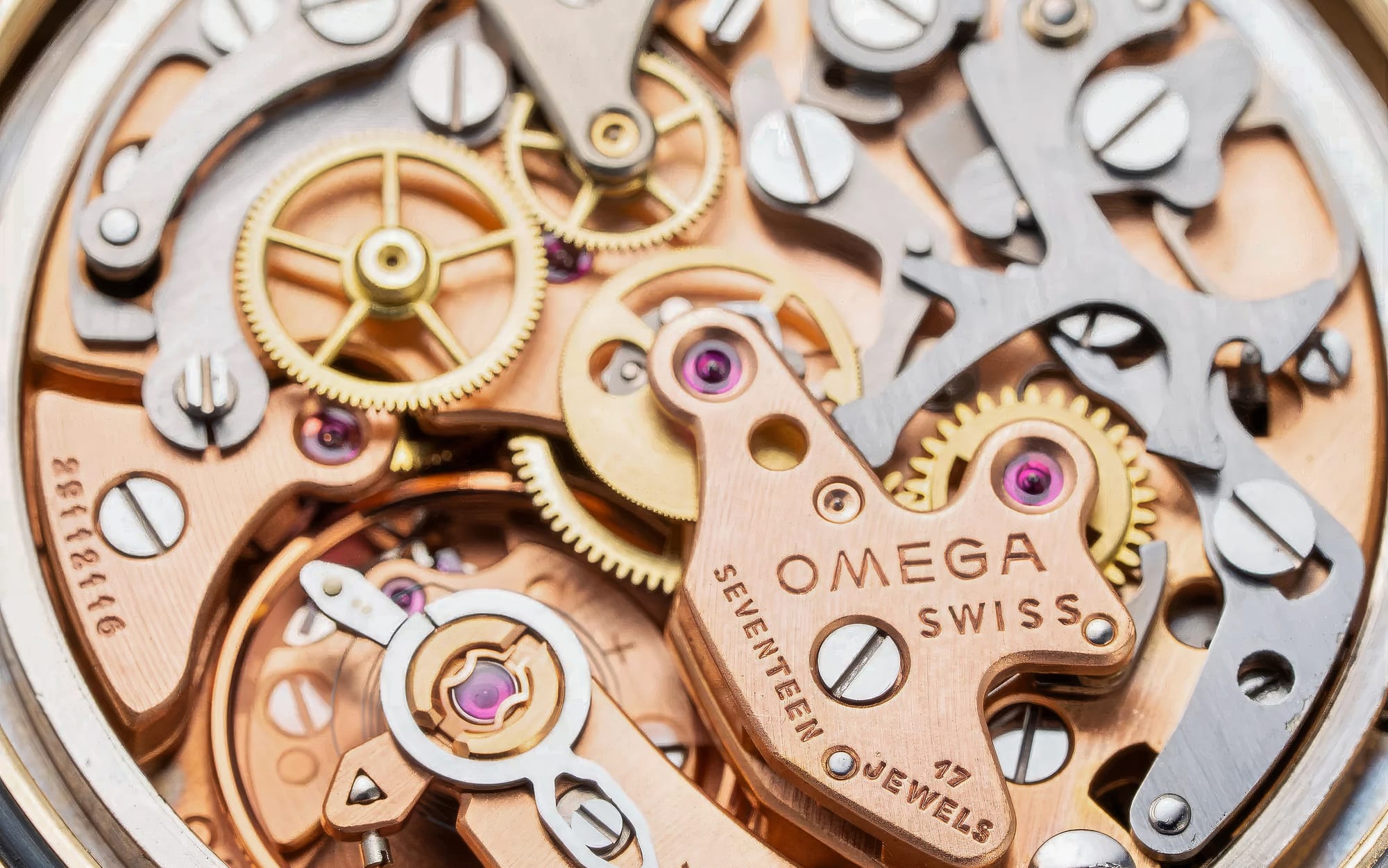
Caliber 861. Manually wound, 17 jewels (on 1970 production), 21,600 vibrations per hour, 48-hour power reserve. Omega introduced this movement in 1968 as the replacement for the caliber 321. It uses a cam-actuated system for the chronograph rather than a column wheel.
The same movement powered the Speedmaster Professional ref. 145.022 that sat alongside this Soccer Timer in Omega catalogs. The cam system catches criticism from column wheel purists, but the 861 ran for decades across multiple Omega lines.
On the wrist
The 41mm cushion case distributes mass differently than a round case. The black hands stand out against the white dial. The red subdial sections provide the only color beyond black and white.
I've worn it to exactly zero soccer matches. The timing function works regardless. Press the top pusher, watch the hand sweep, check the 45 at 3 o'clock when halftime arrives.
Condition and value
Many Soccer Timers were worn hard. Finding an unpolished case with a clean dial takes patience. Service history matters. The 861 is robust, but original parts require specialist sourcing.
Wound For Life quoted prices of $2,700-$2,900 for the 145.020 in 2014. That data is a decade old. Current market sits higher, though the Soccer Timer remains cheaper than equivalent-condition Speedmaster Professionals from the same era. Collectors who want weird stuff pay for it. Collectors who want safe investments skip it. I paid market rate for a service dial in excellent case condition.
Verdict
Nobody needs a Soccer Timer. The timing complication solves a problem most owners will never encounter. The colors clash with conservative wardrobes. The case shape alienates tool watch purists.
None of that matters when you see the dial. Omega built something weird and powered it with the same movement as the Speedmaster Professional. I don't follow soccer, but now I own a soccer timer.
References
- Hodinkee. "A Hat Trick of Vintage Soccer Timers From Omega, Breitling, and Heuer." Anthony Traina, December 3, 2022.
- Wound For Life. "Lessons in Wristory: Omega Seamaster Soccer Timer." Shane Griffin, August 13, 2014.
- Millenary Watches. "Omega Caliber 861 Complete Guide." November 1, 2022.
- WatchBase. "Omega caliber 861."
- Professional Watches. "Omega 861."


