

A few watches in my collection that I doubt I would ever sell. I really like the Avigation lineup, especially the A-7. The A-7’s skewed dial and monopusher setup weren’t stylistic quirks, they were functional choices to support cockpit use under pressure, where timing had to be precise and all controls had to remain engaged.
The most common question I get is, "Why the dial is rotated?"
- In the 1930s, the U.S. Army Air Corps set strict specifications for pilot chronographs, including the Type A‑7 standard, which called for a rotated dial and a single push‑button chronograph integrated into the crown.
- The dial is rotated (about 40°) so that a pilot wearing the watch on the inside of the wrist can read the time without letting go of the controls.
- This alignment made it easier to glance at the watch while both hands stayed on the cockpit instruments, critical during tense maneuvers.
- The A‑7 started life in 1934 (specification 27748), issued by the U.S. Army Air Corps as a navigation chronograph, essentially a pocket-watch-adapted wristwatch.
- Longines, along with brands like Gallet and Meylan, supplied these to pilots. It was large (around 49–51 mm) so it could be worn over flight jackets or for leg use.
- It featured one button in the crown to start, stop, and reset the chronograph, simple and usable even with gloves.
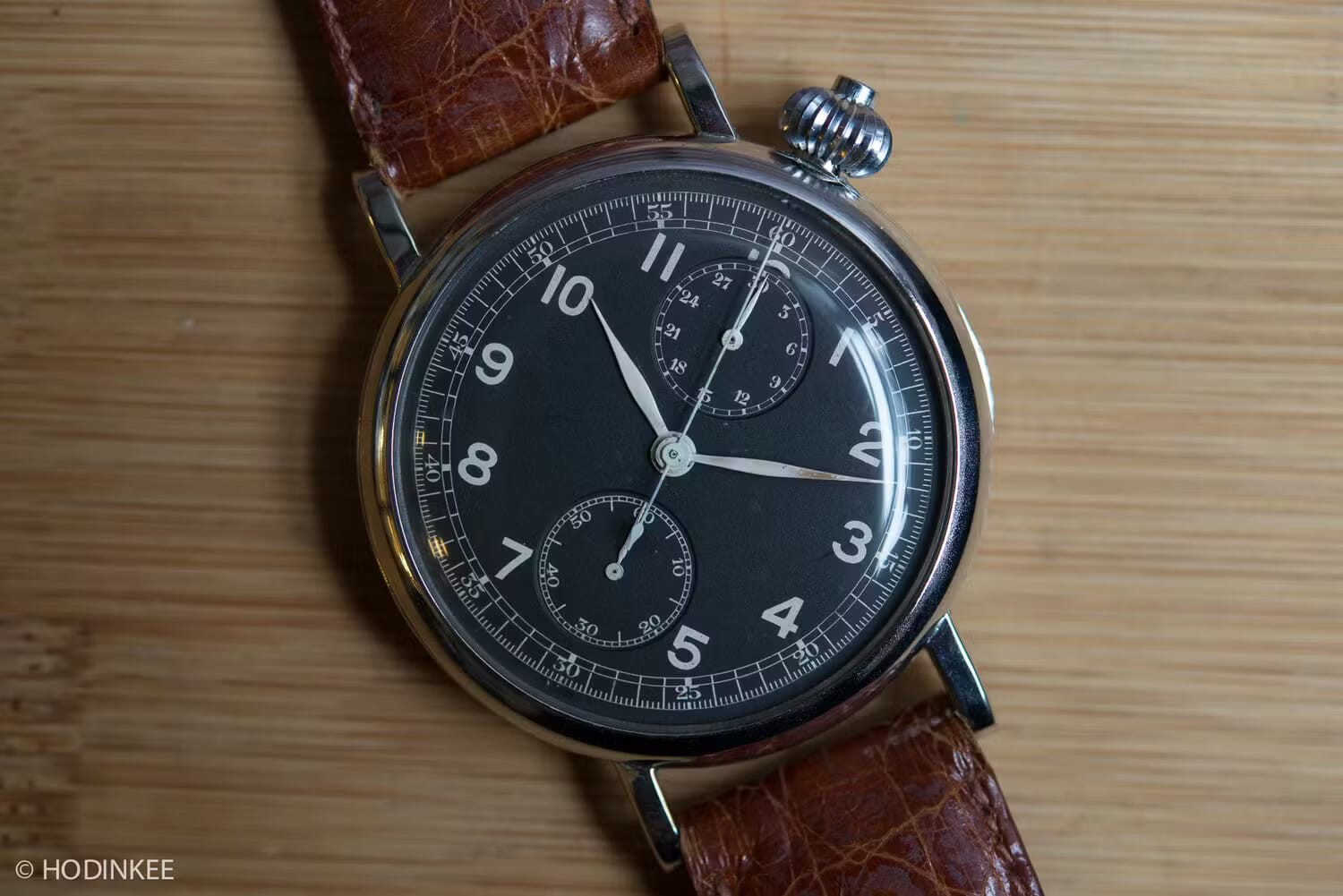
The most common question I get is, "Why the dial is rotated?"
- In the 1930s, the U.S. Army Air Corps set strict specifications for pilot chronographs, including the Type A‑7 standard, which called for a rotated dial and a single push‑button chronograph integrated into the crown.
- The dial is rotated (about 40°) so that a pilot wearing the watch on the inside of the wrist can read the time without letting go of the controls.
- This alignment made it easier to glance at the watch while both hands stayed on the cockpit instruments, critical during tense maneuvers.
- The A‑7 started life in 1934 (specification 27748), issued by the U.S. Army Air Corps as a navigation chronograph, essentially a pocket-watch-adapted wristwatch.
- Longines, along with brands like Gallet and Meylan, supplied these to pilots. It was large (around 49–51 mm) so it could be worn over flight jackets or for leg use.
- It featured one button in the crown to start, stop, and reset the chronograph, simple and usable even with gloves.


