

This Overseas has been on my wishlist for a few years, always in view but never quite in reach. My first step was the Dual Time in titanium (Ref. 47450/000W-9511). That watch showed me how Vacheron balances refinement with grit. A polished watch has its place, but brushed steel with a titanium bezel feels different: industrial, almost rebellious, as if Vacheron wanted to prove that luxury could thrive in matte surfaces instead of shiny. That contradiction is what first hooked me.
The market played its part too. My Dual Time once traded at 120 percent of retail before coming back down. The Chronograph rode the same wave, peaking near 190 percent over retail before falling again. Without that correction, this would still be out of reach. Gravity, in this case, is my friend.
Design
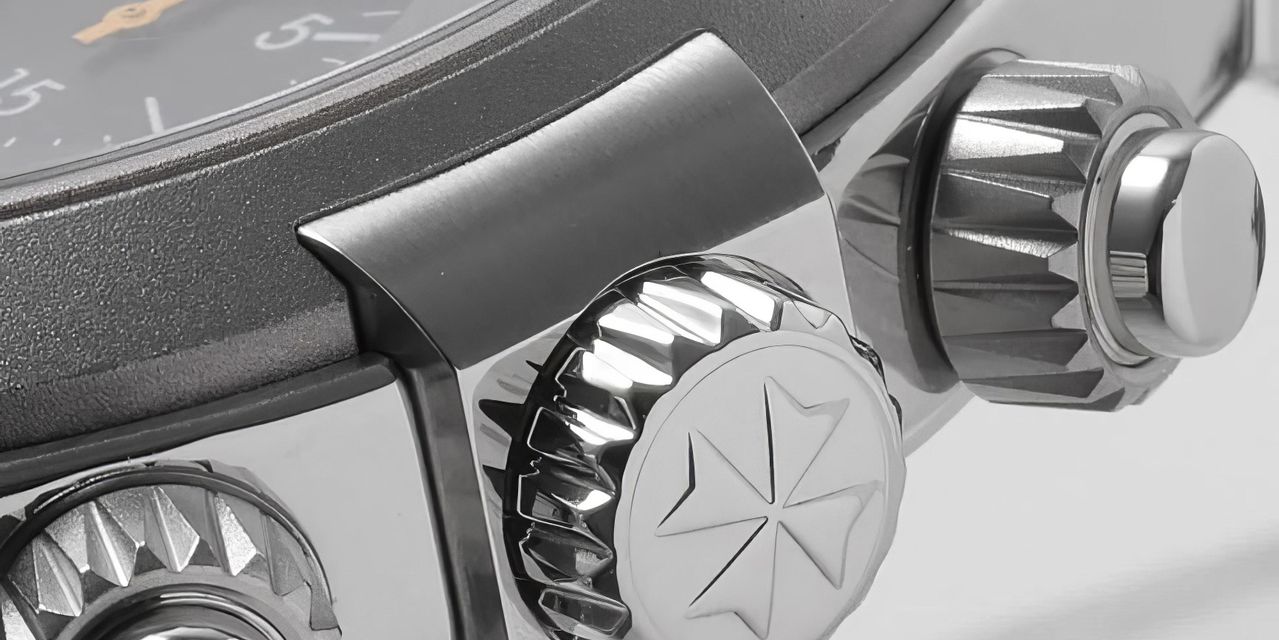
The design language is Overseas through and through. The Maltese cross bezel cutouts, the brushed steel surfaces softened by polished chamfers, the integrated case all signal Vacheron. Yet this reference stands out. I am normally not a big fan of a 12 o'clock date window, but the oversized date at 12 somehow works on this watch. The horizontal chronograph registers keep balance without feeling rigid. And then the orange accents on the hands: a shock of color that makes the whole watch feel alive.
It is limited to 340 pieces, rare enough to matter but still attainable compared to the unobtainium Everest. Which brings me to the watch that set this obsession in motion: the Overseas Everest. Originally made as a prototype for Cory Richards, it came with a unique titanium bracelet and Ventile strap with Nubuck lining. Production Everests - the Dual Time and the Chronograph - were each capped at 150 pieces and shipped only on straps (Deployant). Erik Gustafson of Hairspring compared the Everest to the Porsche 911 Dakar, and he was right. Both are tougher versions of icons, adapted for harsher terrain without losing their identity.
The Everest once traded near $100,000 and now sits closer to $60,000-80,000 (Hairspring). Out of reach for me, but its spirit still pulled me toward this Chronograph. I am already scouting straps to echo that Everest look.
Movement
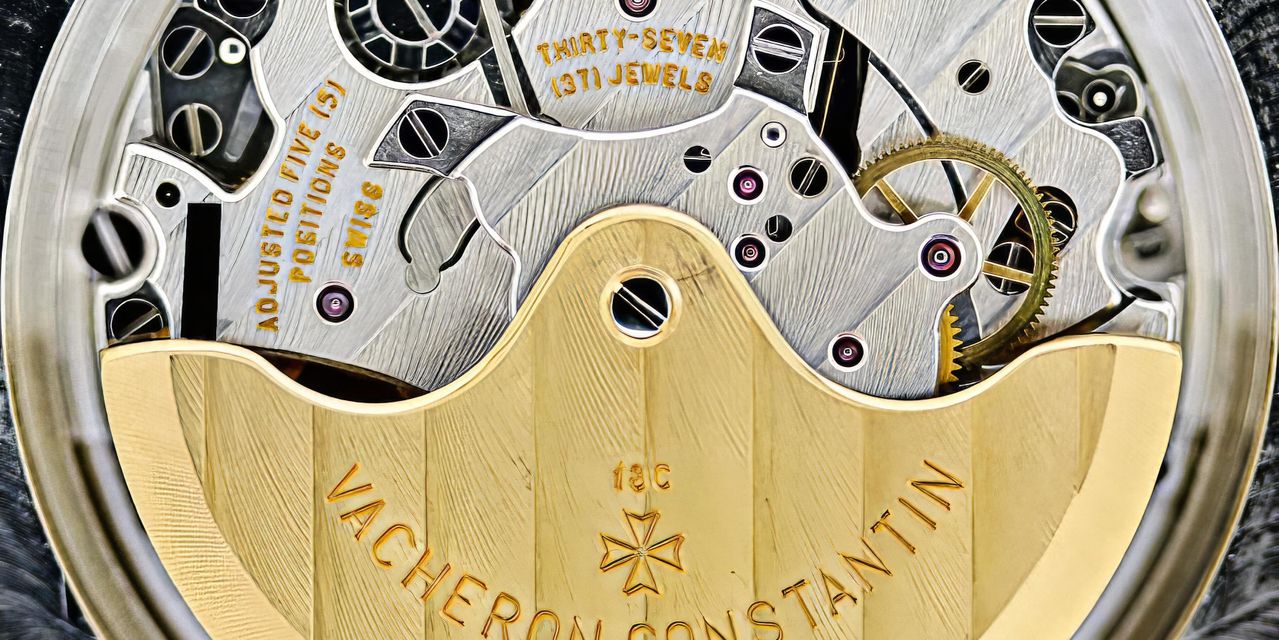
Inside is the caliber 1137, based on the F. Piguet 1185 and reworked by Vacheron. It beats at 21,600 vph, offers a 40-hour reserve, and delivers what matters in daily use: crisp pushers, a confident date jump, and legible subdials.
The absence of a central running seconds hand does leave the watch feeling quiet when the chronograph is idle, as with all chronographs. At times I glance at another clock just to make sure it is alive. Yet when you engage the chronograph, the orange hand sweeps to life and more than compensates.
Wearing Experience
The Overseas always surprises me with its comfort. For a 42 mm chronograph, this case wears light and flat, never bulky. It disappears until my clasp scrapes against my laptop, a reminder that scratches are inevitable. Every clasp I own tells the same story. Brushed steel does not hide the scars, it embraces them.
There was never a bracelet for this watch. Only Richards's prototype Everest had one. That leaves me exploring straps, which feels right. A Cordura or gray strap with orange stitching would capture the same spirit as the Everest, and maybe even improve the versatility of the watch.
History
The Overseas name began in 1996, but its true roots are in the 222 of 1977, designed by Jorg Hysek. That was Vacheron's first answer to the integrated steel sports watch. The 49150/000W-9015, released in 2015 and limited to 340 pieces, belongs to the second generation of the Overseas. It signaled Vacheron's willingness to push materials and color in directions the line had not explored before.
This reference also lived through the wild secondary market years. Prices once doubled retail, riding the wave that turned every steel sports watch into an asset class. Now they have returned to earth, just as my Dual Time did. I like these corrections. They clear away the fever and let us see the watches for what they are: luxury tools meant to be worn.
Final Thoughts
To add this Chronograph to my collection, I sold a few watches I really liked: a Rolex Explorer, Cartier Santos, Breitling Premier, and Omega Seamaster. Each had its place. Letting them go was not easy. That I did so for this Vacheron says everything.
The Everest will remain the one that got away. The Chronograph is not its substitute. It has its own gravity, its own presence. Brushed steel, titanium bezel, orange hands, 340 pieces in existence. It belongs to the Overseas lineage but carries a character that sets it apart.
The Overseas has always been the contrarian sports watch. Less obvious than the Nautilus, less loud than the Royal Oak, but just as interesting. The Chronograph keeps that contrarian streak alive. It does not demand reverence or beg to be locked away. It asks to be worn, scratched, lived with. That, more than rarity or hype, is what I like about it.


