

I have loved the Santos for as long as I have loved watches. The first luxury watch I bought was a Cartier Tank Française, about twenty-five years ago. Even then, it was a toss up between the Tank and the Santos. The Tank won that round, and that specific watch has come and gone, but the design that really kept calling me back was the Santos. Since then I have bought four or five different Santos references.
So when Cartier announced a full titanium Santos de Cartier completely out of the blue, reference WSSA0089, I was already half sold before I saw the spec sheet. At first glance it is the same watch I already know. Same square case. Same exposed screws. Same silvered opaline dial with blue sword hands. Same dimensions as the large steel Santos WSSA0018. The change is only metal and finish. At least that is what the catalog suggests.
Who this watch is really for
On paper, this is a large model Santos with a 39.8mm case width, 47.5mm lug to lug, and 9.38mm thickness. It uses the automatic 1847 MC caliber, has 100 meters of water resistance, and comes on a titanium bracelet with a second strap in nubuck alligator with a folding buckle. Both use Cartier’s QuickSwitch system for tool-free swaps.
The target buyer is not someone discovering the Santos for the first time. It is the person who already owns a steel Santos or has wanted one for years, but now wants a version that feels more like a daily companion and less like a shiny object. If you only care about the romance of Alberto Santos-Dumont and early aviation, you can get that in steel.
The titanium version is for people who know exactly what a steel Santos is, and want to tilt the formula toward practicality and restraint.
What changed and what stayed
The core design is untouched. Cartier still describes the Santos de Cartier as a watch that grew out of a request by Santos-Dumont in 1904, when he wanted to tell the time during flight. Rounded square case. Curved lugs that flow into the bracelet. Screws that reference the structure of the Eiffel Tower. Silvered opaline dial with printed Roman numerals and a railroad minute track. Blued sword hands under a sapphire crystal.
The titanium reference keeps every one of those features. The layouts of the titanium and steel large models are identical. The case dimensions are exactly the same as the steel model, with no change to the shape of the case or bracelet.
What changes: the material moves from stainless steel to titanium (likely grade 5 or grade 23), and the surface treatment shifts from the familiar mix of polished and brushed surfaces to a largely bead-blasted finish with polished accents on the edges.
Bead-blasted titanium and scratches
If you have owned a steel Santos, especially the large WSSA0018, you already know the deal. The polished bezel is gorgeous and it scratches if you look at it the wrong way. The rest of the case mixes brushed and polished surfaces in that Cartier way that looks like jewelry and sports watch at the same time. That balance is what makes the steel Santos such a flexible piece, but the shine also draws a lot of attention.
The titanium model does not change the shape, but the bead-blasted finish knocks the shine almost completely flat. The surface feels soft and silky to the touch, not rough or chalky. Cartier leaves narrow polished bevels around the case and bracelet links, so the watch still has a little sparkle when the light hits the edge, but the overall impression is more industrial and muted.
Two practical effects: it is far less of a scratch magnet in daily use, because there are fewer mirror-polished areas to mark. Hairlines are still possible on any blasted surface, but they are less obvious than on a mirror bezel. And it reads less like a dressy luxury watch and more like a refined tool. It crosses from "special evening" into "I can wear this any day and not think about it too much."
That last part matters to me. My steel WSSA0018 always felt like a dress watch and a bit of an attention grabber. The titanium version pulls it back toward something stealthy, without losing the Cartier identity.
Weight and feel on the wrist
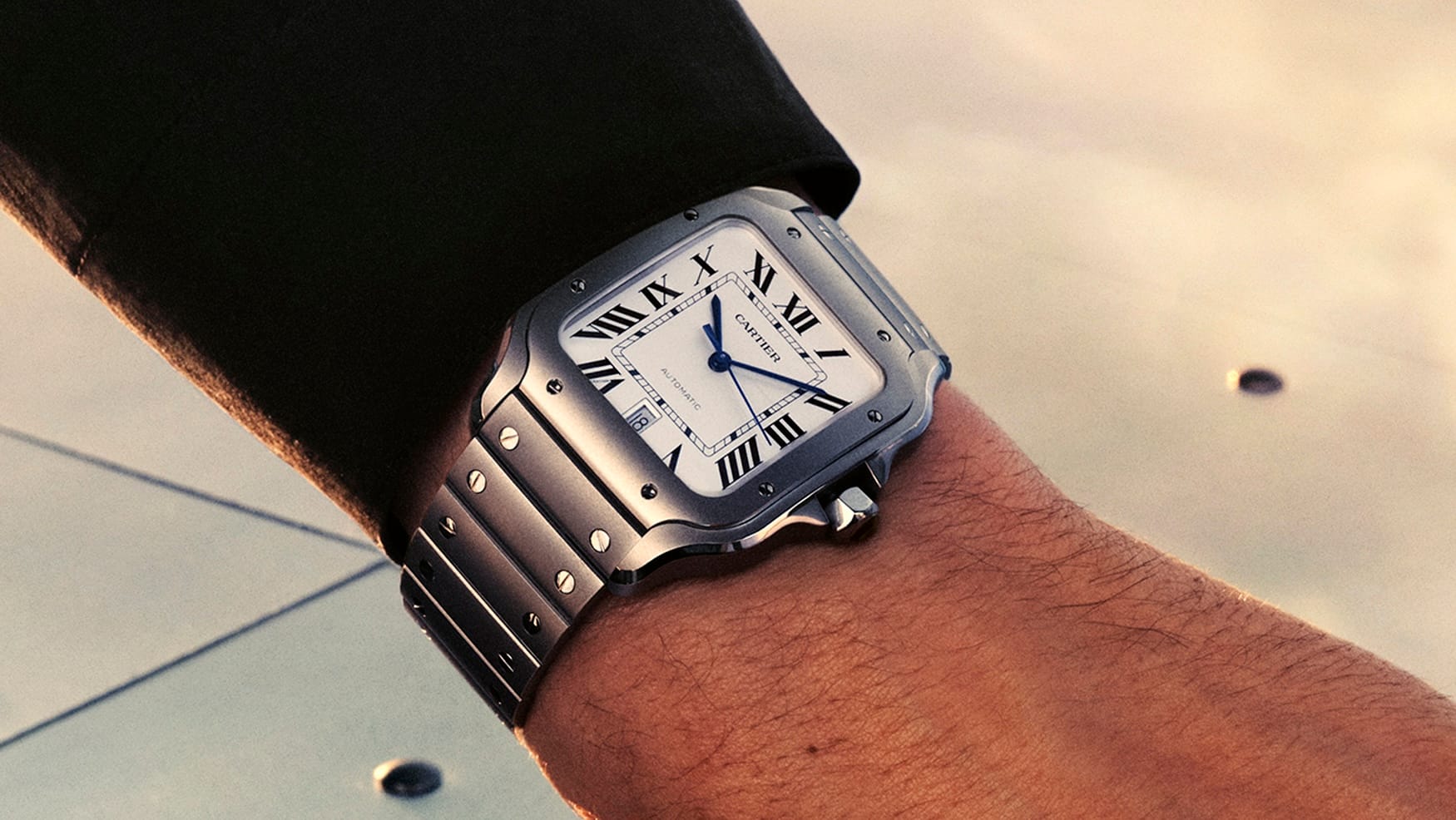
The other obvious change is weight. The large steel Santos is not heavy by modern sports watch standards. The open caseback, the relatively slim 9.38mm thickness, and Cartier’s habit of shaving excess metal keep the weight under control. The titanium version takes that idea much further.
On the wrist, the titanium watch is almost "barely there." After a couple of weeks wearing it, I found it almost disappears, especially on the nubuck or alligator strap via QuickSwitch.
On one hand, the reduced weight suits the original aviation story. A pilot’s watch that sits flat, clings to the wrist without flopping, and does not feel like a brick is ideal. On the other hand, I am used to heavier watches. I miss the old heft of the Santos 100 references and I prefer the slightly more substantial feel of the WSSA0017 chronograph. Titanium is a joy for some people and oddly unsatisfying for others. If part of your enjoyment of a watch comes from the sensation of mass, the Santos titanium may feel too polite.
Case, bracelet, and strap
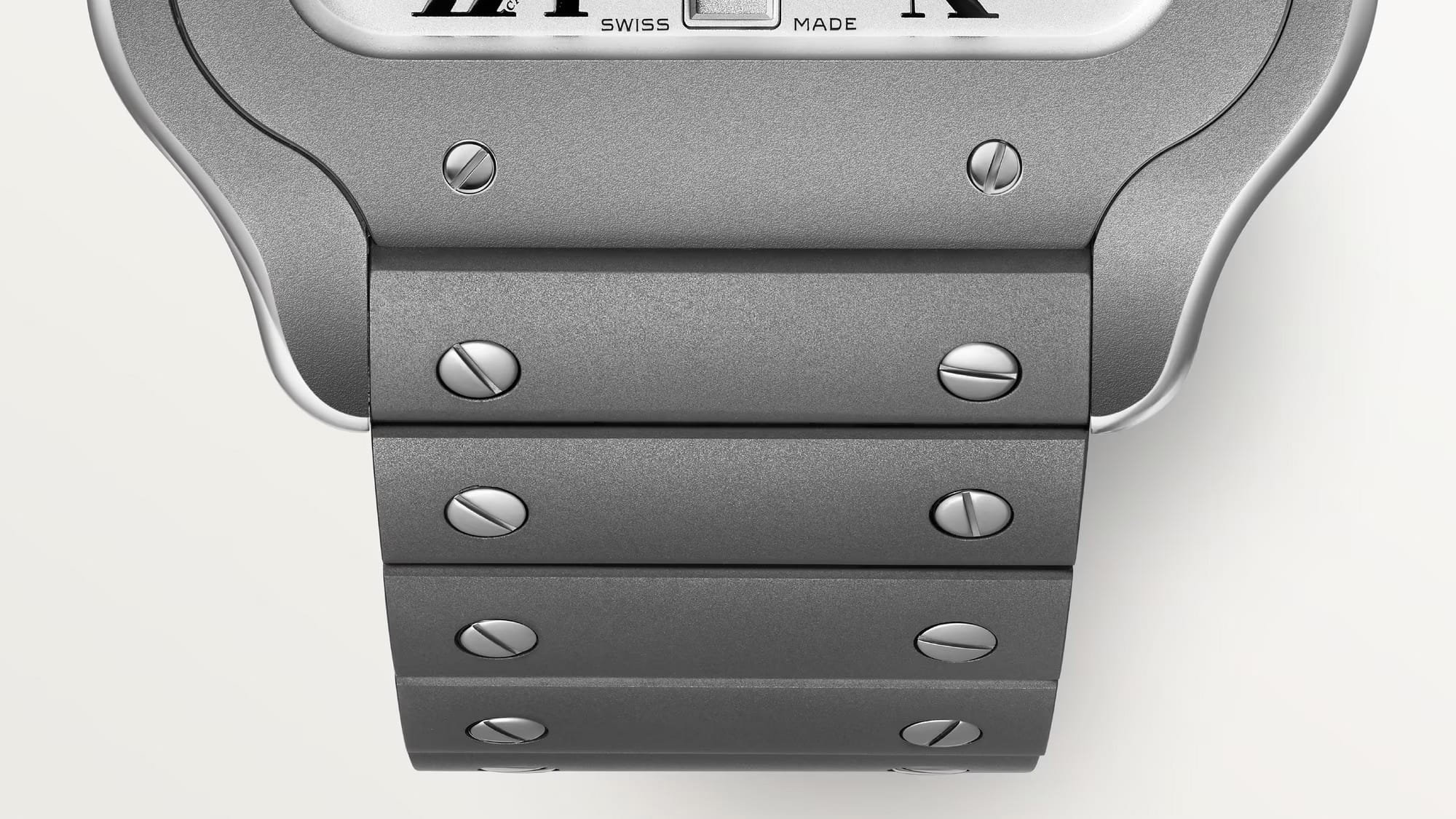
Cartier kept all the modern Santos features. Dimensions: 39.8mm wide, 47.5mm lug to lug, 9.38mm thick. Water resistance: 10 bar (about 100 meters), same as the steel model. Crystal: flat sapphire with a square profile that follows the bezel. Crown: the familiar seven-sided shape, in titanium with a black faceted synthetic spinel.
The bracelet is also titanium, with visible screws and a design that flows into the case, and it uses QuickSwitch so you can remove it with a press under the lugs. The steel model adds the SmartLink system for tool-free bracelet sizing. The titanium ships with both the titanium bracelet and a second strap in nubuck or calf with an interchangeable folding clasp.
This makes experiment easy. Wear it on bracelet for a slightly more formal mood, switch to the strap for a softer, more casual feel in seconds.
Movement and performance
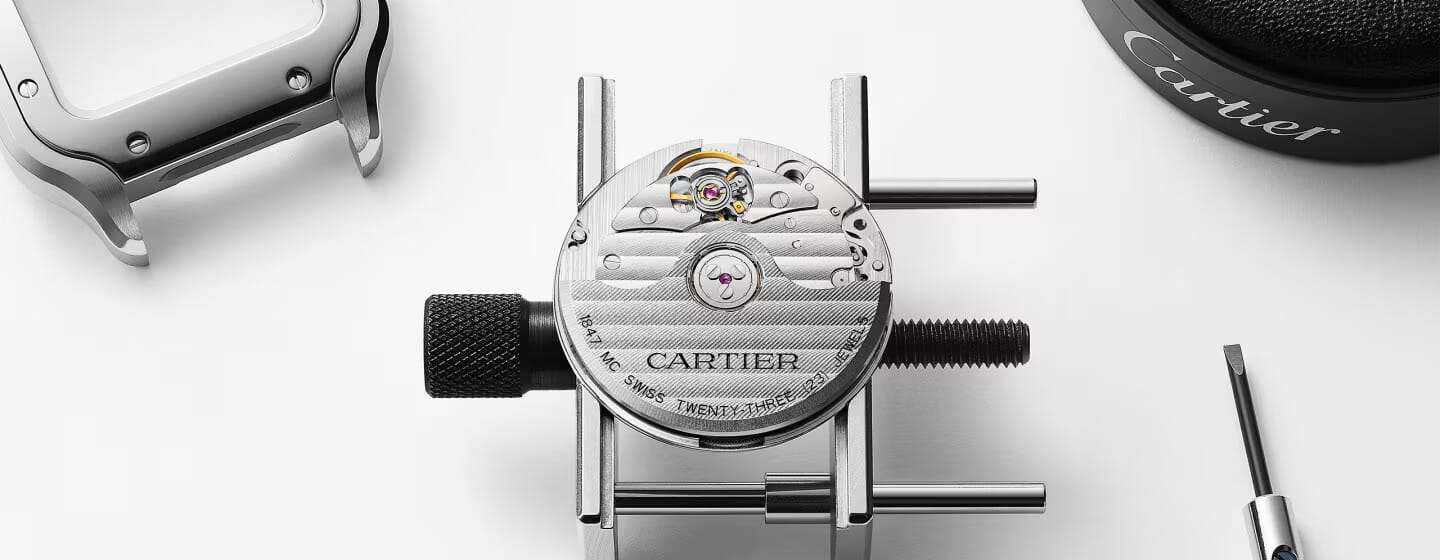
Inside is Cartier’s 1847 MC caliber. This is a modern in-house automatic that runs at 4 hertz with about 36 to 42 hours of power reserve. It uses a simple, robust architecture: central rotor, hours, minutes, central seconds, and a date at six. It is not a high horology movement, and Cartier does not pretend it is. It is built to be reliable, relatively easy to service, and thin enough to keep the case profile elegant.
The movement choice is why the watch stays under ten millimeters thick and remains comfortable. It is also why the watch can live happily as a daily wear piece rather than a delicate special occasion watch.
From dress icon to everyday companion
The steel WSSA0018 is a dress watch to my eye. Not because of the design itself—the Santos shape has always been a little sporty and a little elegant at the same time—but because the high polish and the shine almost insist on being noticed.
The titanium WSSA0089 keeps all of the Santos language but changes the mood.
The watch press has picked up on this. The bead-blasted finish is the key. It removes the scratch-sensitive polished bezel that kept some people away and makes the Santos feel more like a true daily sports watch. Some have called the titanium version the best direction for the large Santos, because it drags the line back out of the vague dressy sports watch zone and into the role of a real tool.
That matches my experience closely. The watch still has class, but it no longer shouts across the room. It can pull off a shirt and jacket just fine, then disappear under a sweater and jeans without feeling out of place. The titanium and bead-blasted surfaces are the reason.
Price and value
Retail prices vary by market, but the pattern is clear. The large steel Santos WSSA0018 has been around $8,500 to $9,000 USD at many authorized retailers. The new titanium WSSA0089 arrives higher, around $11,500 USD at several authorized dealers and boutiques, and grey market listings are already in the five-figure range.
That is a meaningful premium for a watch that looks almost identical from across the room.
What you get for that premium: titanium across case and bracelet, far more forgiving finishing in daily use, and a very different wearing experience, both visually and in terms of weight.
If you want the classic look and do not mind scratches, the steel watch is a better value. If you already have a steel Santos or have always hesitated because of the polished bezel and the dressy shine, the titanium version finally matches the image many of us have of the Santos in our heads—something that can actually live an active life.
How it fits in my own Santos history
I like this watch more than the WSSA0018. The lower reflectivity and the cooler, more industrial mood feel closer to my taste. It is less of an attention magnet. It suits daily life better. It is also less of a scratch magnet, which is exactly what several early reviews hoped for.
I still do not love it as much as the WSSA0017 chronograph. I also miss the heavy, planted feeling of the old Santos 100 references and may go back to one of those. But that says more about my personal taste than about any flaw in the watch. I appreciate the heft and extra drama.
If I zoom out, the WSSA0089 feels like a watch aimed at someone who has already gone through that journey. Someone who has owned shiny steel Santos models, has experienced how quickly they mark up, and now wants a version that keeps the soul of the design while being less precious.
Final thoughts
The titanium Santos de Cartier WSSA0089 is not here to reinvent the Santos. It does something quieter. It takes a design that has already been iconic for a century, keeps the exact same lines and proportions, and simply changes the material and surface treatment.
That small change turns an elegant steel watch into something cooler, more discreet, and genuinely practical as an everyday piece. It feels almost invisible on the wrist. It is less vulnerable to the first scratch. It keeps the 100-meter water resistance and the solid 1847 MC movement. It still looks like a Santos in every way that matters.
If you want a pure hit of Cartier sparkle, the steel WSSA0018 or a gold model may still be more satisfying. If you want your Santos to behave more like a tool and less like jewelry, especially if you already own or have owned a Santos, the titanium WSSA0089 is the version that finally aligns the story of Alberto Santos-Dumont’s flying watch with the reality of how you can wear it today.
And if you are the person who has loved the Santos for twenty-five years and has owned several along the way, this might be the one that feels the most honest on your wrist, even if part of you still misses the comforting weight of those old, heavy cases.


