

In a quiet valley within the Ore Mountains (Erzgebirge) of Saxony, Germany, lies the small town of Glashütte. The town’s transformation from a struggling mining community to the center of German watchmaking began in 1845, when Ferdinand Adolph Lange arrived with a pioneering vision and the financial support of the Kingdom of Saxony, according to the German Watch Museum Glashütte and A. Lange & Söhne’s official historical record.
By mid-century, the training programs initiated by Lange inspired other entrepreneurs to establish their own ateliers. After World War II, Glashütte found itself on the eastern side of a divided Germany. Under Soviet occupation, previously independent watchmakers were consolidated into a single, state-owned conglomerate known as VEB Glashütter Uhrenbetriebe (GUB), as documented by the German Watch Museum Glashütte and detailed in Glashütte Original’s official history.
While this nationalized structure limited brand individuality, it also preserved the watchmaking expertise of local artisans. With German reunification in 1990, Glashütte’s watch industry began a renaissance. Former companies re-emerged, and new ones appeared. Among the storied names is A. Lange & Söhne, originally founded by Ferdinand Adolph Lange himself in 1845. Absorbed into GUB after WWII, it was re-established as an independent brand in the early 1990s, known for its use of German silver movements and hand-engraved balance cocks.
Another key player, Glashütte Original, directly descends from the GUB conglomerate. When state ownership ended, Glashütte Original retained the in-house expertise and equipment developed under nationalization. Today, the brand merges classic design elements with contemporary engineering, offering everything from heritage-inspired models to modern complications.
Though Glashütte’s roots stretch back to the 19th century, the town has also embraced modern innovation. Nomos Glashütte, founded immediately after the fall of the Berlin Wall, embodies a younger approach. It combines Bauhaus-inspired aesthetics with its proprietary escapement, the Nomos Swing System. Meanwhile, Mühle-Glashütte demonstrates another facet of local expertise. Tracing its origins to Robert Mühle’s 1869 instrument workshop, the firm eventually turned to wristwatches in the mid-1990s, known for rugged, nautically influenced designs.
Not all companies weathered the upheavals of war and nationalization, yet many persisted in name or spirit. Tutima Glashütte, for instance, originated in 1927, left East Germany after WWII, and returned to Glashütte in 1997. Union Glashütte, first founded in 1893, successfully navigated shifting political and economic environments to continue offering timepieces that reflect Saxon craftsmanship at a more accessible price point. Newer names like Moritz Grossmann carry on old traditions under revived monikers. And the collaboration-focused lineage continues with Wempe Glashütte I/SA, where marine chronometers and other fine watches undergo rigorous German chronometer testing.
Beneath Glashütte’s modern prosperity lies a foundational principle: the designation “Glashütte” is legally protected. According to German Watch Museum Glashütte and A. Lange & Söhne’s statements, at least 50% of a watch’s movement components must be fabricated in Glashütte to bear the town’s name. This rule preserves the region’s hallmark of excellence, ensuring that genuine Glashütte watches meet the stringent standards set long ago by Lange and his successors.
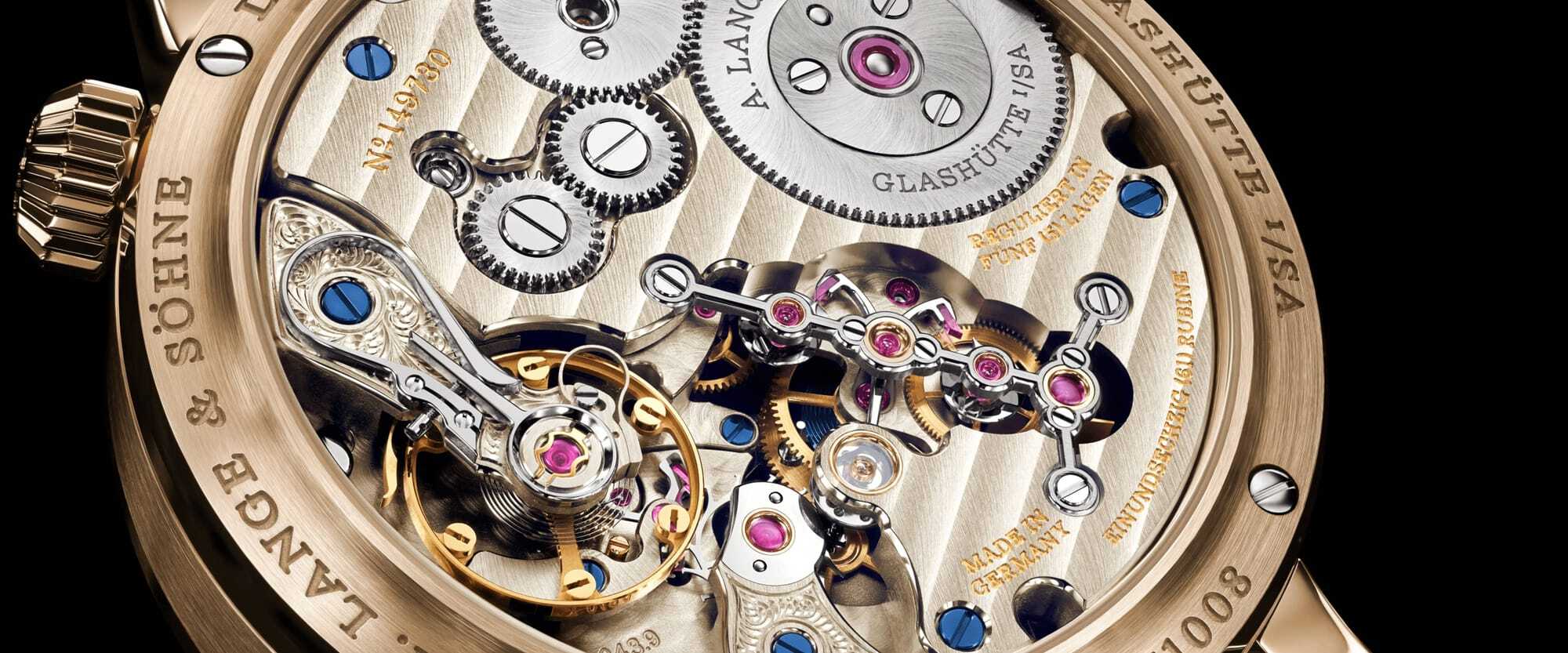
Workshops still rely on hand-engraving, elaborate finishing, and historical design references, while modern CNC machines and computer-aided design tools handle production efficiency. Underlying it all, the town’s commitment to passing on craft knowledge endures: local apprenticeship programs help young watchmakers acquire the specialized skills necessary for advancing Glashütte’s time-honored legacy.
Whether it is the engraved mechanics of an A. Lange & Söhne piece or the minimalist lines of a Nomos dial, every watch bearing the Glashütte name had at least half of its movement made in this one Saxon town.
