

I've been circling Squale for years. Every time I stumble across a vintage photo of Jacques Mayol or Enzo Maiorca ascending from impossible depths, there's usually a Von Büren case strapped to their wrist. The brand occupies a peculiar position in dive watch history: everyone used their cases, but few remember their name. When I spotted this Chronofactum limited edition 1521 UCB, I finally had an excuse to stop circling and dive in.
The "UCB" designation refers to the watch's most interesting element: a Bund-style bezel originally developed for German Bundeswehr combat divers in the 1970s. If you've never heard of this configuration, you're not alone. It's an obscure chapter of military horology, and this Chronofactum collaboration brings it back.
Squale history
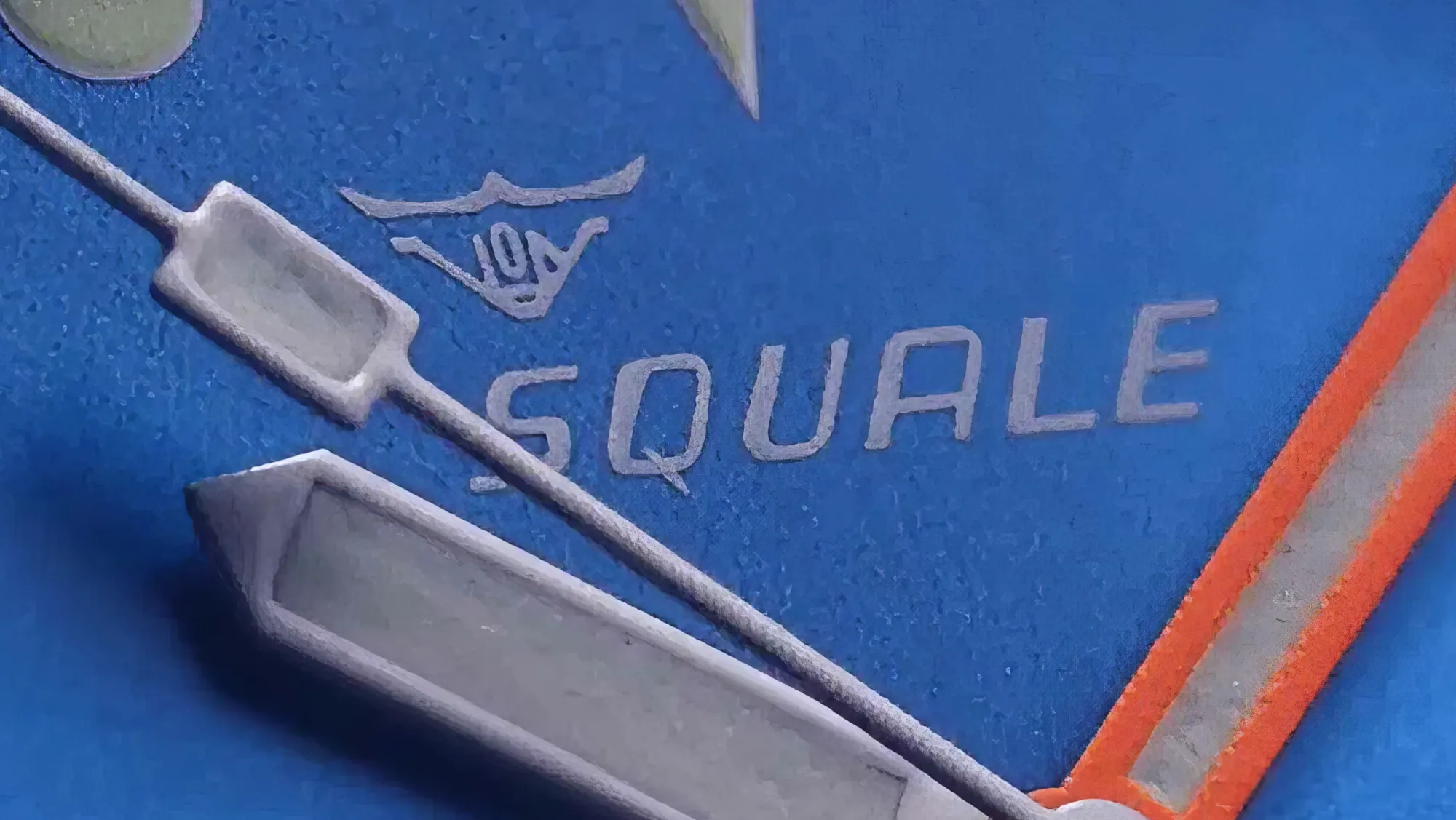
Charles Von Büren set up his watchmaking operation in Neuchâtel, Switzerland in 1946, initially making cases and components for other brands. By 1959, he had registered the Squale trademark and obtained the first patent for dive watch case production. The name comes from the French word for shark, which explains the logo.
During the 1960s and 1970s, Squale became the go-to dive watch case supplier. Their client list reads like a who's who of the era: Blancpain, Doxa, TAG Heuer, Sinn, Auricoste, and Zeno all sourced cases from Von Büren. The company's signature 50 Atmos case, with its distinctive 4 o'clock crown position, appeared under numerous brand dials. When you see a vintage dive watch from this period with unusual crown placement, there's a reasonable chance Squale made that case.
The brand also has serious diving credentials. Italian freediver Enzo Maiorca wore a Squale Master when he set the world record of 67 meters. Jacques Mayol reached 76 meters wearing a Squale 2002. Maria "Jolly" Treleani, triple world champion of competitive breath-hold diving from 1965-1967, chose Squale for her record attempts. These weren't paid endorsements. Professional divers picked Squale because the watches worked.
Squale also supplied military contracts. The Italian Navy's Diving Corps and the Folgore Parachute Brigade received watches through official channels. In 2016, Squale became the official supplier to the Italian State Police Divers Unit.
After Charles Von Büren retired, the Maggi family bought the company. They had previously distributed Von Büren/Squale watches in Italy and knew the founders well. Today, Squale is headquartered in Ticino, Switzerland, with all assembly and final inspection done on Swiss soil.
The Chronofactum connection
Chronofactum is a German retailer specializing in microbrands and independent manufacturers. Founded in 2019 near Munich, they partnered with Squale to produce this limited edition 1521 UCB.
The Bund bezel
The "Bund" designation needs some explanation because most people have never encountered it.
In the mid-1970s, the German Bundeswehr needed specialized dive watches for their elite Kampfschwimmer combat diving unit. They approached Blancpain to produce a modified Fifty Fathoms meeting their operational requirements. Blancpain turned to Squale for the cases.
What made the Kampfschwimmer requirement unusual was their use of closed-circuit rebreather systems. Unlike conventional SCUBA equipment with limited air supply, closed-circuit systems recycled breathing gas, enabling dive durations measured in hours rather than minutes. A standard dive bezel with its 60-minute scale became useless when operations regularly exceeded that timeframe.
The solution was the "sterile" or Bund bezel: a smooth insert with only a single luminous triangle at 12 o'clock. Combat divers could mark their starting hour and track elapsed time without the visual clutter of minute graduations. The configuration was never commercially available. Military issue only.
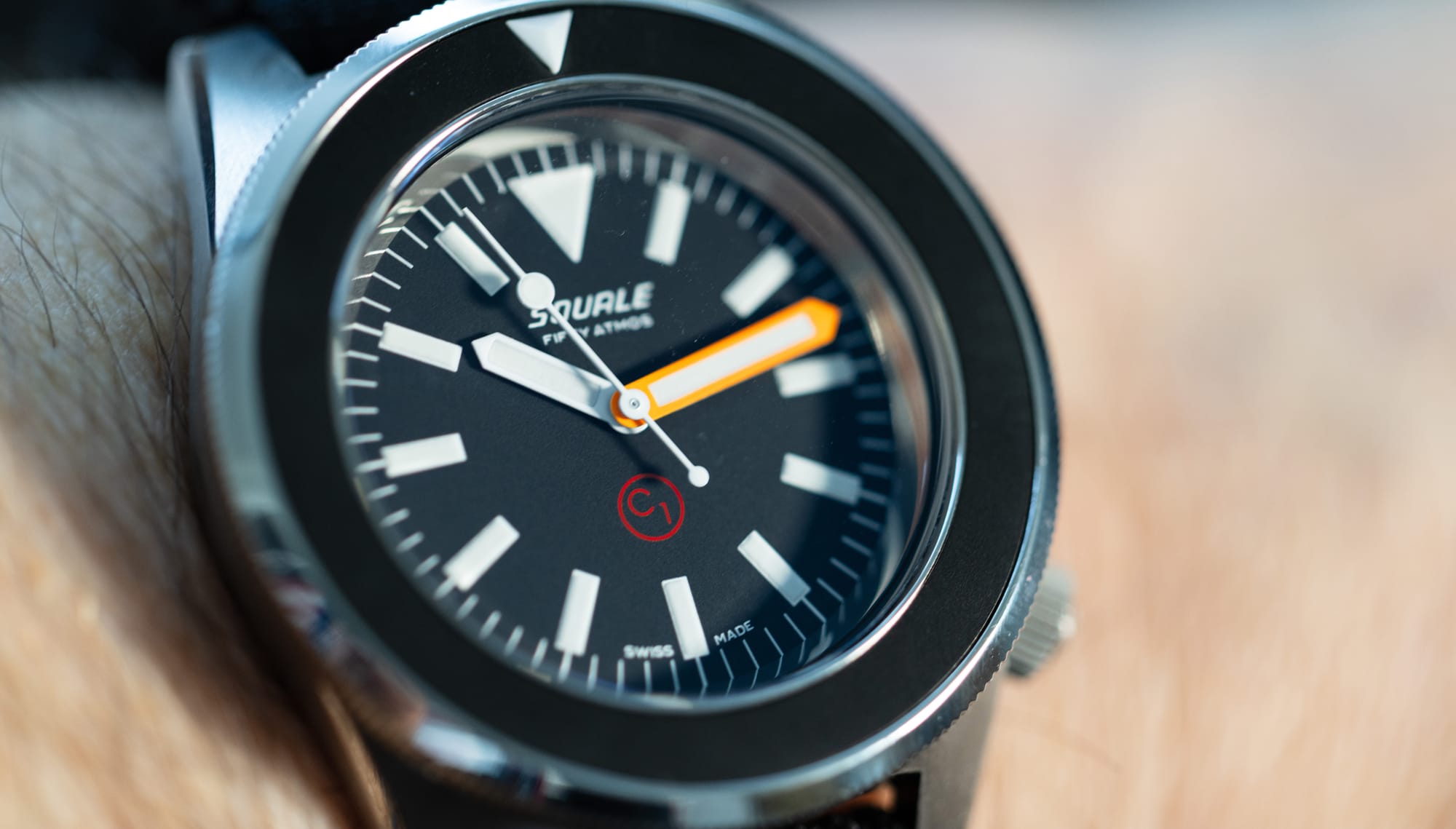
This Chronofactum edition revives that concept. The bezel has a single luminous triangle marker against a smooth PVD-coated aluminum insert. It works for recreational diving (set the marker at your entry point and track hours underwater) but honestly, its main appeal is the Bundeswehr connection.
Case and build
Case specs:
- Material: 316L stainless steel
- Finish: Brushed surfaces with polished edges
- Diameter: 42mm
- Height: 12.5mm
- Lug-to-lug: 48mm
- Lug width: 20mm
- Water resistance: 500 meters (50 ATM)
- Crystal: Sapphire with double anti-reflective coating
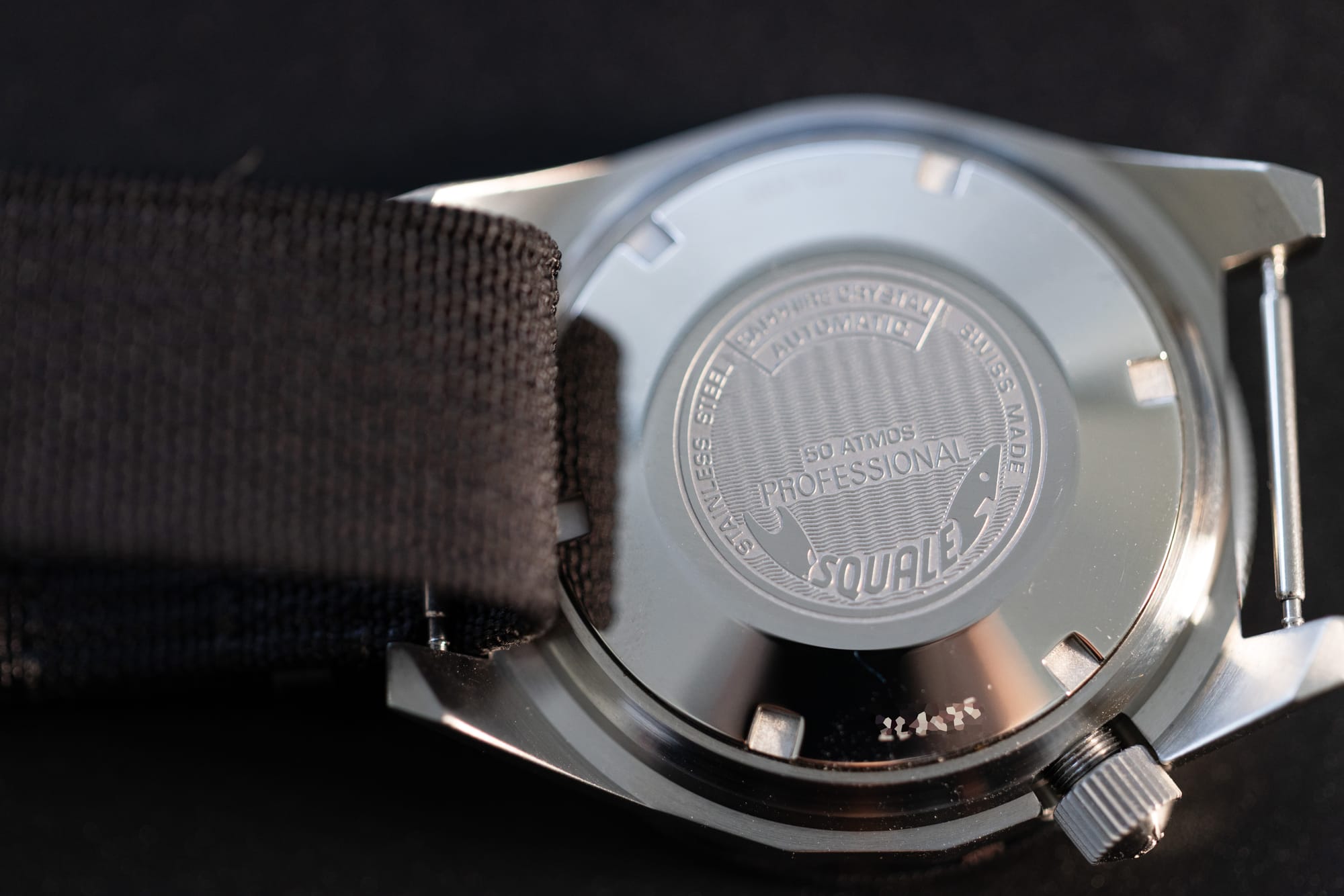
- Caseback: Screwed with acid etching and limited edition numbering
The case follows Squale's 1521 formula. At 42mm wide and 48mm lug-to-lug, it sits comfortably on medium to large wrists. The 12.5mm height is reasonable for a 500-meter dive watch.
Finishing alternates between brushed flats and polished beveled edges. The execution is clean. You're not getting Rolex-level detail here, but you're also not paying Rolex money. Solid tool watch construction.
The unidirectional bezel has 120 clicks and a locking mechanism to prevent accidental rotation. The aluminum insert carries a Beretta-PVD coating that should resist scratching better than uncoated alternatives. Action feels precise with minimal backplay between positions.
The screw-down crown provides the expected sealing for 500-meter water resistance. Threading feels smooth without the grittiness that sometimes shows up at this price range.
The screwed caseback has acid-etched decorations and individual limited edition numbering. Whether this adds value depends on how you feel about numbered production runs.
Dial and hands
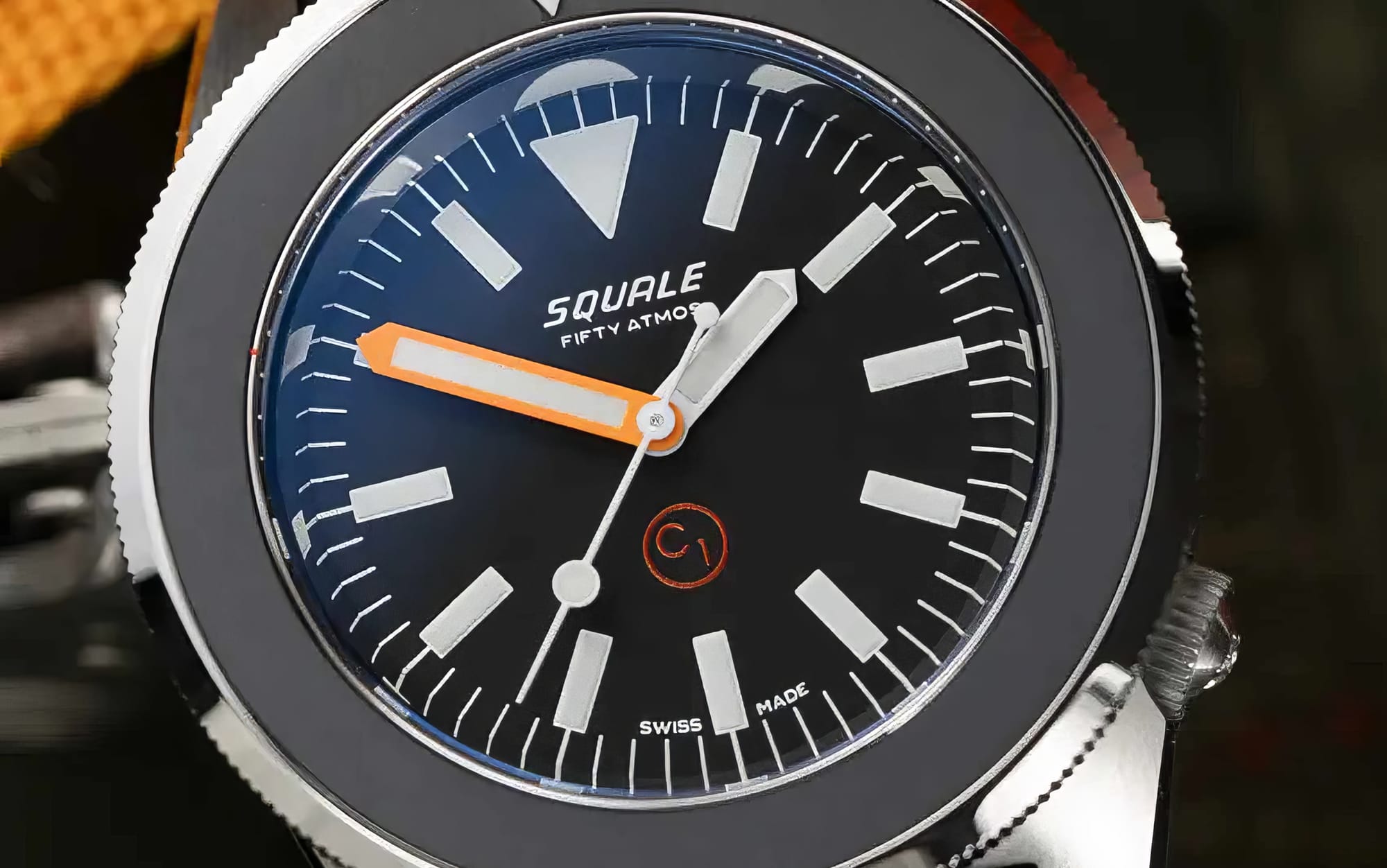
The dial takes its cues from the 1970s Bundeswehr Fifty Fathoms while keeping Squale identity. Black background, applied rectangular hour indices. The marker shapes follow the original military configuration rather than Squale's standard round dots.
Lume deserves attention. Squale specifies 15 layers of Swiss Super-LumiNova C1, and the visual evidence supports this. Initial charge produces aggressive brightness that fades to sustained legibility over hours of darkness. C1 means cool white glow rather than the greenish tint of older formulations.
The hour hand is a simple baton shape filled with lume. The minute hand has the distinctive orange coloring from the original Bundeswehr Blancpain, making it instantly distinguishable from the hour hand. The seconds hand has a red "C1" circle near its tip, referencing the lume type.
Text includes "SQUALE" and "FIFTY ATMOS" below 12 o'clock, with "SWISS MADE" split across 6 o'clock.
No date window. You lose the convenience of quick date reference but gain a cleaner dial and one less gasket to maintain. I prefer it this way.
Movement
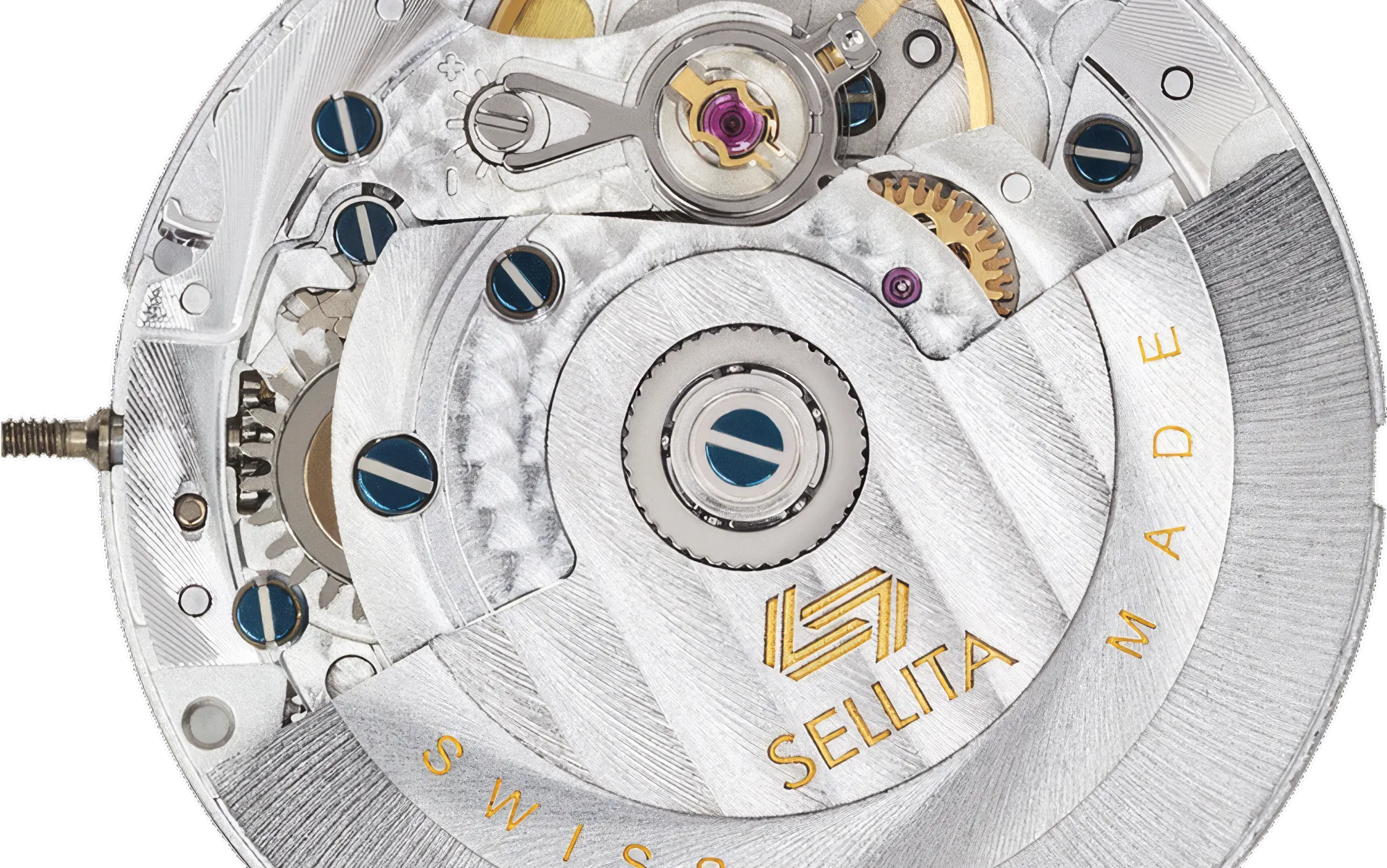
The Sellita SW200-2 Spécial (Elaboré) powers the watch:
- Type: Mechanical automatic (self-winding)
- Jewels: 26
- Frequency: 28,800 vibrations per hour (4Hz)
- Power reserve: 38 hours
- Grade: Elaboré
The SW200-2 is essentially Sellita's version of the ETA 2824-2 that powered generations of Swiss automatics. The "Elaboré" grade means tighter tolerances and better finishing than standard production. Expect timekeeping within COSC-adjacent accuracy depending on individual unit variation.
The "Spécial" designation and "NoDate" configuration mean the movement was ordered without date mechanism. This isn't simply a standard movement with the date wheel removed. The absence eliminates the "ghost" date position where a quickset change would normally occur.
Thirty-eight hours of power reserve is reasonable. A full wind Friday evening carries into Monday morning without intervention. Wearing the watch daily makes this academic since automatic winding maintains charge.
The movement is hidden behind the solid caseback. You won't see the rotor spinning, but given the Elaboré grade finishing is functional rather than decorative, this seems appropriate.
On the wrist
Initial impressions confirmed my expectations about sizing. The 42mm case with 48mm lug-to-lug has substantial wrist presence without overwhelming mid-sized wrists. On my 7-inch wrist, the lugs sit inboard of my wrist edges. Comfortable.
Weight registers as noticeable without becoming burdensome. The steel case and sapphire crystal add mass that communicates solidity. This feels like a tool built for purpose rather than a fashion accessory styled as one.
The included Von Büren rubber strap (nice historical callback with that naming) and stainless steel bracelet with folding clasp give you options. The rubber works better for actual water exposure; the bracelet dresses it up for desk duty.
That Bund bezel requires adjustment if you're accustomed to standard dive configurations. Without minute markers, precision timing below one hour requires different mental processing. For recreational diving within no-decompression limits, you're probably checking a computer anyway. The bezel becomes more useful for tracking surface intervals or general elapsed time.
Legibility underwater and in low light is excellent. The C1 charge holds through night dives or predawn checks without requiring a flashlight.
What's in the box
- Squale x Chronofactum 1521 UCB No Date watch
- Stainless steel bracelet with folding clasp
- Von Büren rubber strap with polished Squale pin buckle
- Documentation and warranty materials
- Limited edition certificate
The Bund bezel isn't styling for styling's sake. It connects to a specific operational requirement from a specific military unit during a specific period, and Squale's involvement in that original supply chain makes this connection legitimate rather than appropriated. That matters to me.
As a dive watch, the 1521 platform is proven. Five hundred meters of water resistance, reliable Swiss automatic movement, excellent lume. The no-date configuration reduces potential failure points.
If you need minute markers for precise dive timing, look elsewhere in Squale's catalog. If you value the story this watch tells and can work with hour-scale elapsed time tracking, the 1521 UCB delivers.
This was my first Squale. The brand's history runs deeper than most competitors at this price point, and this Chronofactum edition highlights aspects of that heritage that are usually overlooked. I expected a capable dive watch. What I got was an education in military horology that I can wear.
References
- Squale Official Website, "La Storia" - Company history timeline
- Wikipedia, "Squale Watches" - Brand overview and historical milestones
- Hodinkee, "Blood In The Water, Water In Its Blood: A Brief History of Squale"
- Chronofactum company information and authorized dealer documentation
- Historical documentation on Blancpain Fifty Fathoms 3H Bundeswehr variants
- Auction records and collector documentation on Bund-issue dive watches
