

Even before it lands, the Milgraph feels rare in a way that has nothing to do with hype machines or celebrity ambassadors. I've never seen one in the wild. There's a reason: Micromilspec only ships a small annual batch to civilians because most of what the company spends time on is what they were founded to do - building custom, Swiss‑made mechanical watches for actual military units and organizations. That "military first, civilian second" stance isn't marketing spice; it's the company's operating system. Their own project ledger reads like a NATO roll call, from Norwegian Air Force squadrons to the U.S. Space Force and AWACS crews. The brand lists dozens of issued projects since 2019, beginning with a 330‑piece commission for Norway's 330 Rescue Squadron just days after incorporation.
Where this thing comes from and why that matters
Micromilspec is based in Oslo, led by CEO‑cofounder Henrik Rye, with designer Anders Drage and Alexander Kadim among the core team. Their studio address is right on Akersgata if you ever want to knock on the door. Crucially, they didn't start as a consumer brand that later dabbled in "military style." They started as a contractor answering specific briefs from people who wear uniforms for a living, then opened a tiny civilian window each year for those of us who want that same DNA.
The Milgraph itself went public at Geneva Watch Days 2024 as a left‑hand ("destro") GMT chronograph with a Grade‑5 titanium case, a glove‑friendly QuadGrip bezel, and a quiet visual language built for legibility rather than shine. The launch watch ran 100 m water resistance and 50 pieces for the year - good luck getting one. For 2025, Micromilspec applied a meaningful engineering bump: 200 m water resistance and 75 pieces in the second edition. That spec lift alone hints at the brand's cadence: iterate based on field testing, not focus groups.
Press materials from the debut confirm the left‑side crown was originally specified to minimize wrist abrasion and interference when worn directly on the skin or over gear; the entire premise is "untraceable," purely mechanical timekeeping for environments where electronics may be restricted.
What it is: a purpose‑built chrono‑GMT
On paper, Milgraph reads simple:
The case is 42 mm × 15 mm in Grade‑5 titanium with a micro‑blasted finish, 200 m water resistance, and a sapphire crystal. The bezel has four deep "QuadGrip" notches for gloved operation.
Crown and pushers sit on the left. The three sub‑registers are labeled plainly — hours, minutes, seconds — which sounds obvious until you're juggling tasks and want to skip the mental translation.
Inside is a La Joux‑Perret L121: automatic, column‑wheel chronograph with integrated GMT, 60‑hour reserve, 28,800 vph, regulated to ±4 s/day at Soignée grade. It comes with a 5‑year international warranty, configurable strap or bracelet, and engraving if you want it.
Two practical notes jump out. First, 200 m water resistance is proper do‑anything sealing; it's overbuilt for a field chrono‑GMT and very welcome. Second, the left‑side controls aren't an affectation; they reduce the chance of crown bite and snagging under cuffs or webbing - exactly the odd frictions that make you leave a watch in the drawer. It is going to take some getting used to wearing a destro on my left wrist, but I'm up for a challenge.
How it wears
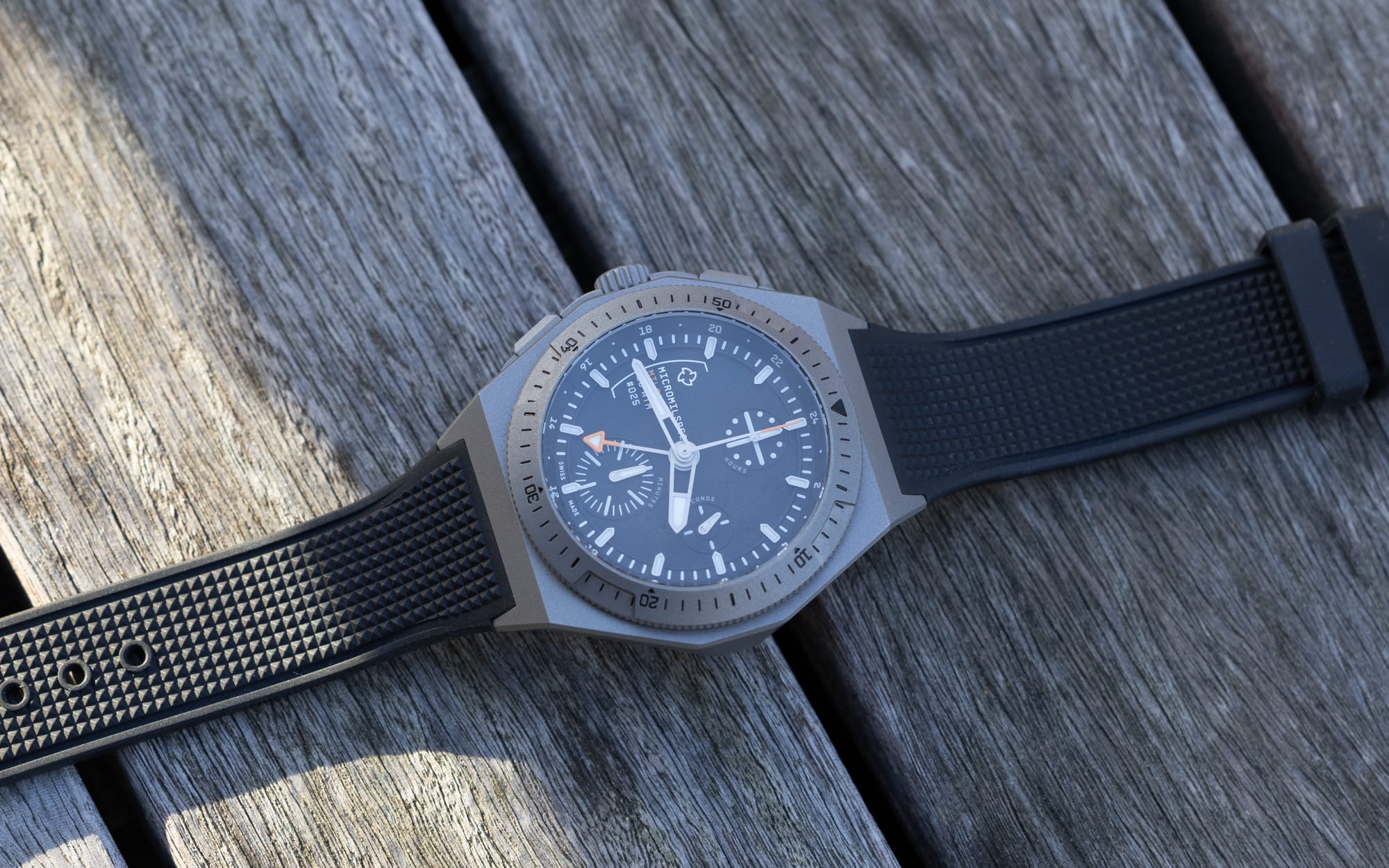
Destro cases are often pitched to right‑wrist wearers, but there are real benefits for left‑wrist wear too. With the crown at 9 o'clock, the Milgraph's controls sit away from the flex point of your hand, so pushing your palm against a desk or shoving a glove through a cuff doesn't drive metal into skin. That's going to be noticeable under a jacket - precisely the scenario I care about. The trade‑off is control choreography: using the chronograph with the watch on the left wrist, I'll be pressing pushers with my left thumb or reaching across with my right hand. Micromilspec's rationale is utilitarian, not nostalgic; in exchange for slightly different button ergonomics, you get a case that's kinder to your wrist and your clothing.
At 42 × 15 mm, this won't be a svelte dress watch, but Grade‑5 titanium keeps mass down, and the lug geometry (published effective lug‑to‑lug just over 50 mm in earlier coverage) has looked compact on reviewers' photos of average wrists. The textured rubber strap integrates cleanly and gives you just enough flex to slide under a cuff. Expect a firm handshake of a watch, not a cuff‑melter.
The dial and the "read at a glance" problem
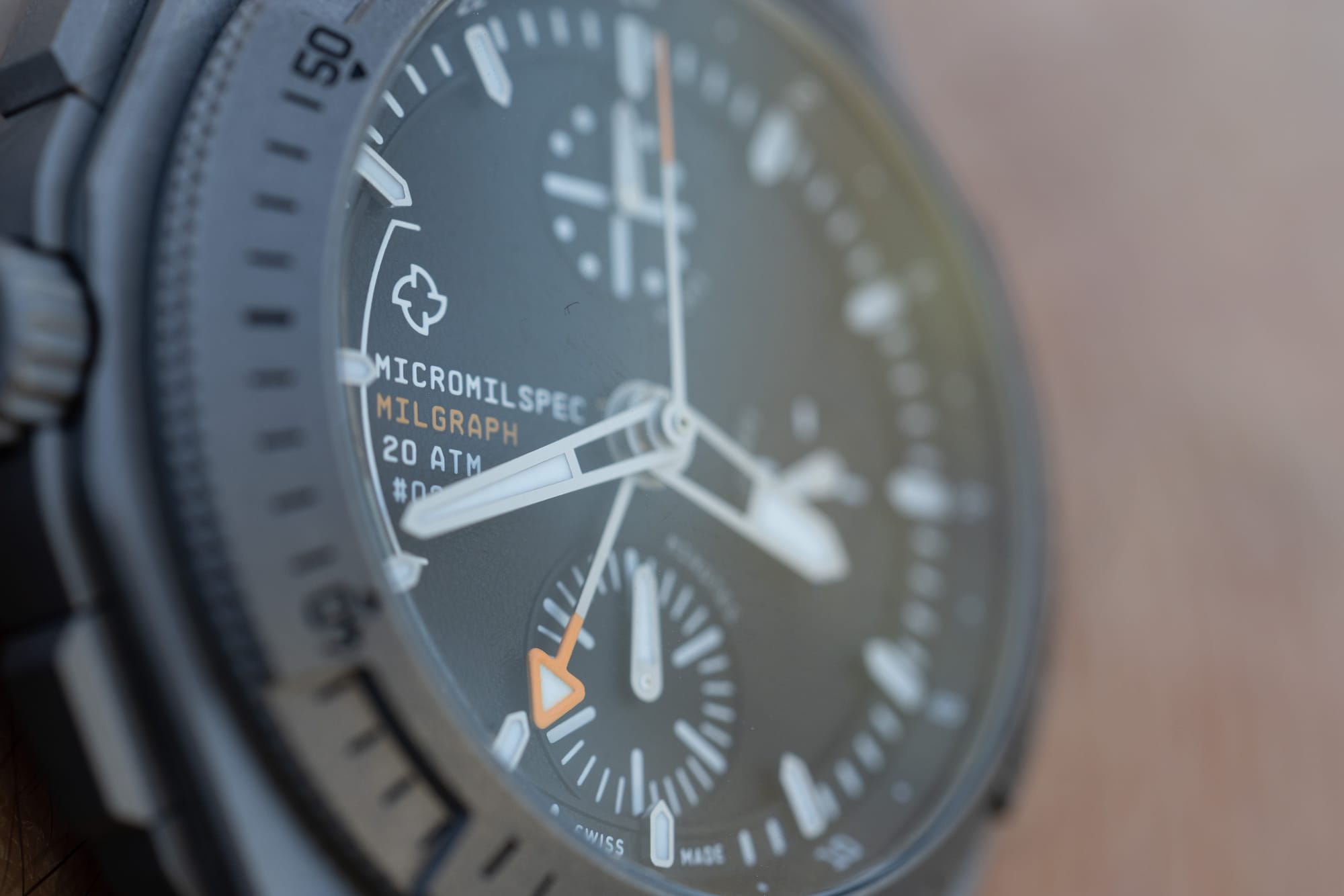
Micromilspec didn't chase novelty on the dial. High‑contrast markers, distinct register sizing, and those blunt hours / minutes / seconds legends make it easy to know which scale you're reading when you're multitasking. The orange‑tipped GMT hand is the only flourish, and it's functional - it's the thread that tethers you home when you're on the move. That restrained, briefing‑room aesthetic is consistent from the launch press images to the current product shots.
The engine room: LJP L121
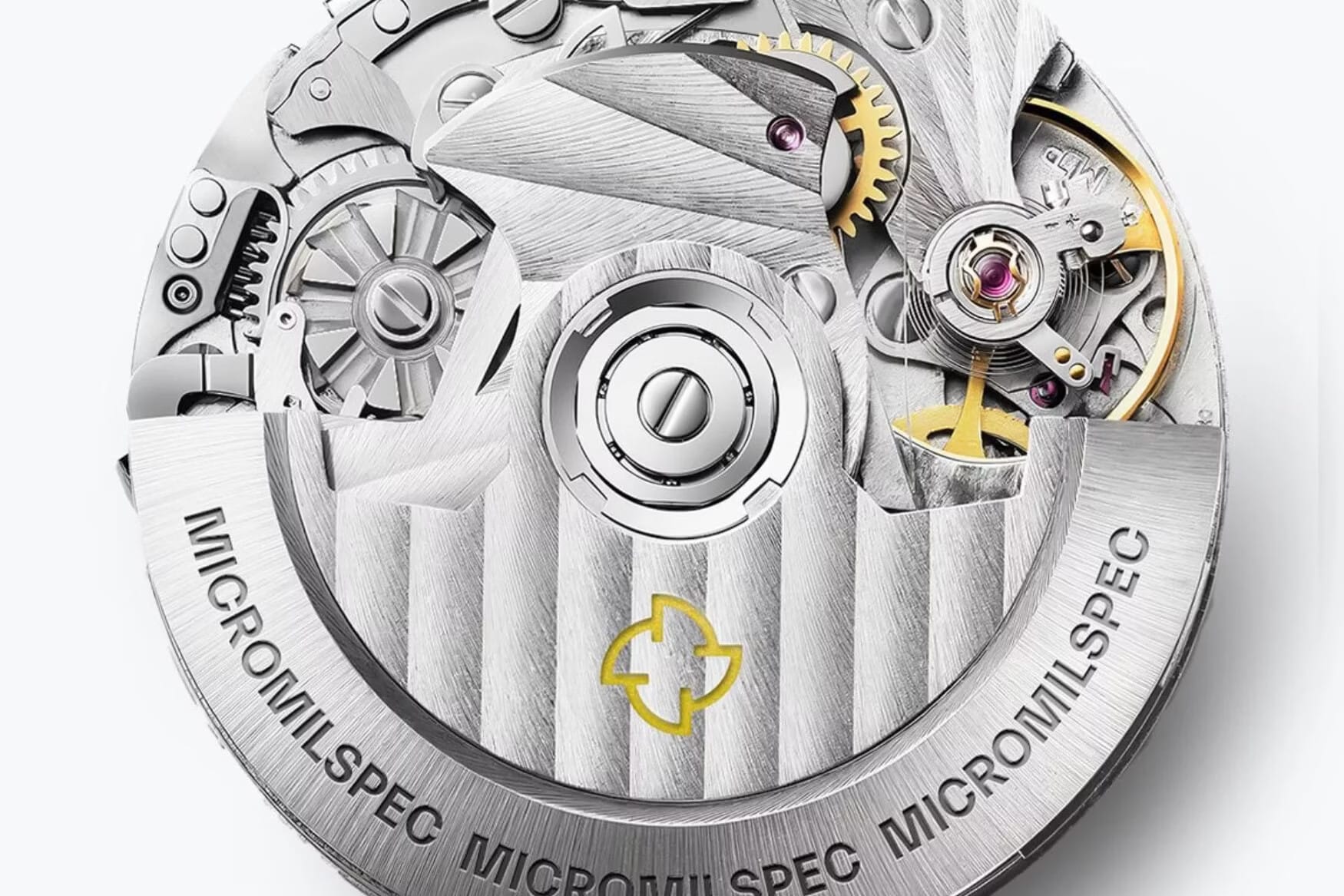
If you've handled watches in this price bracket, you know movements matter - not just spec numbers but serviceability and feel. The LJP L121 is a serious choice for a small maker. It's a modern, column‑wheel architecture with a long reserve, regulated to ±4 s/day in Soignée grade and running at 4 Hz. That's a step up from the Sellita family many microbrands rely on for chronographs; it also explains some of the Milgraph's pricing headroom. Independent coverage from launch reinforced those points, and Micromilspec's own product page spells out the frequency, jewel count, and regulation.
The 2025 edition: what changed and why it's the one to get
The move from 100 m / 50 pieces (2024) to 200 m / 75 pieces (2025) is the headline - not because 100 m was inadequate, but because doubling water resistance in a destro chronograph case is non‑trivial. The extra production doesn't make it common either; seventy‑five watches globally is still vanishingly small. If you want the cleanest spec sheet and the best chance at after‑sales parts compatibility going forward, this is the edition to own.
Price, availability, and the scarcity machine
Micromilspec lists "From USD 3,850" for the Milgraph depending on strap/bracelet. The Annual Collection opens on a specific date, quickly sells out, and the expected delivery for the second edition was listed as Q1 2026 - which lines up with a roughly year‑long journey from ordering to wearing in many cases. The company also publicly noted that the 2025 Milgraph sold out before launch day, which matches the high‑demand reality I experienced.
This isn't a fake waitlist game; it's the downstream effect of a small manufacturer (and of their core military work taking scheduling priority). To get one, you pay, you wait, and you forget about it until the "ready to ship" note lands. The upside: you won't bump into another one at the coffee machine. The downside: patience required.
What it's like to own
The first week will be about cuff comfort — with the crown on the left, there should be less bite when I bend my wrist or jam a jacket over it. The QuadGrip bezel's deep notches look like they'll behave well under gloves without shredding sweater cuffs.
I also want to test legibility under pressure. Can I read elapsed minutes on the chrono and home time on the GMT at a glance? That's the actual reason to mix chronograph and travel functions.
And the pushers. Column‑wheel movements usually reward you with a crisp start/stop. I'll be testing whether left‑side placement compromises speed or accuracy when timing with the watch on my left wrist.
Milgraph vs. Vacheron Constantin Overseas Everest
These watches don't cost the same - the Vacheron Constantin Everest retailed at $31,300 in 2021 and now trades around six figures on the secondary market - but they do share a philosophy: purpose‑built travel timepieces in titanium from makers with real field bona fides.
Common ground
- Material honesty. Both embrace titanium for strength‑to‑weight and a muted, toolish vibe (the Everest mixes titanium with steel elements).
- Travel utility. Where the Everest is a dual‑time with quick‑set local hour, the Milgraph adds a chronograph on top of the GMT - arguably more mission‑oriented if you time events as well as track home base.
- Water resistance that matters. 150 m on the VC vs 200 m on the 2025 Milgraph; both are way beyond "splash proof."
- Edition scarcity. The Everest was limited to 150 pieces; the Milgraph is 75 per year. You will not see either often.
Where they diverge
- Movement & finishing. VC's in‑house Cal. 5110DT/2 carries the Geneva Seal, a 22‑karat rotor engraved with Everest, and the kind of hand finishing one expects at haute horlogerie. Micromilspec's LJP L121 is industrial‑grade excellence - column wheel, 60 hours, regulated tightly - but it's a different tier of finishing (and price).
- Design language. The Everest takes the Overseas template and roughens it: bead‑blasted guards, grey‑blue dial, Cordura strap/quick‑switch set. The Milgraph is Scandinavian‑spare and "issued gear" in tone: labeled registers, micro‑blasted titanium, and a bezel cut to grip.
- Ownership reality. Getting an Everest now means hunting an auction or dealer and being comfortable with six‑figure asks. Getting a Milgraph means joining an annual drop and waiting months. Both require intent; one requires a second mortgage.
The punchline: if the Everest is peak luxury expedition - an alpinist in a tailored down suit - the Milgraph is issued kit you're not afraid to scuff. That's why I drew the line between them. Different budgets, similar spirit.
Military first, civilian second
Micromilspec is slowly expanding a civilian Annual Collection around functional pillars - Milgraph for chrono/GMT, field / diver / pilot additions like the recent Worldtimer and Dualtimer - while keeping its core business in custom unit work. They've also inched into selective retail (e.g., partnerships with James Porter & Son in Glasgow and Time+Tide's London flagship) to give people a place to try the watches without abandoning the small‑batch model. That's a pragmatic path: build tactile presence, keep volumes low, funnel resources into the mission‑ready designs.
Don't expect floodgates to open; do expect iterative, function‑led releases - the kind that move WR from 100 m to 200 m or add a made‑for‑purpose complication- because the brand's real feedback loop still comes from uniformed users.
Final thoughts
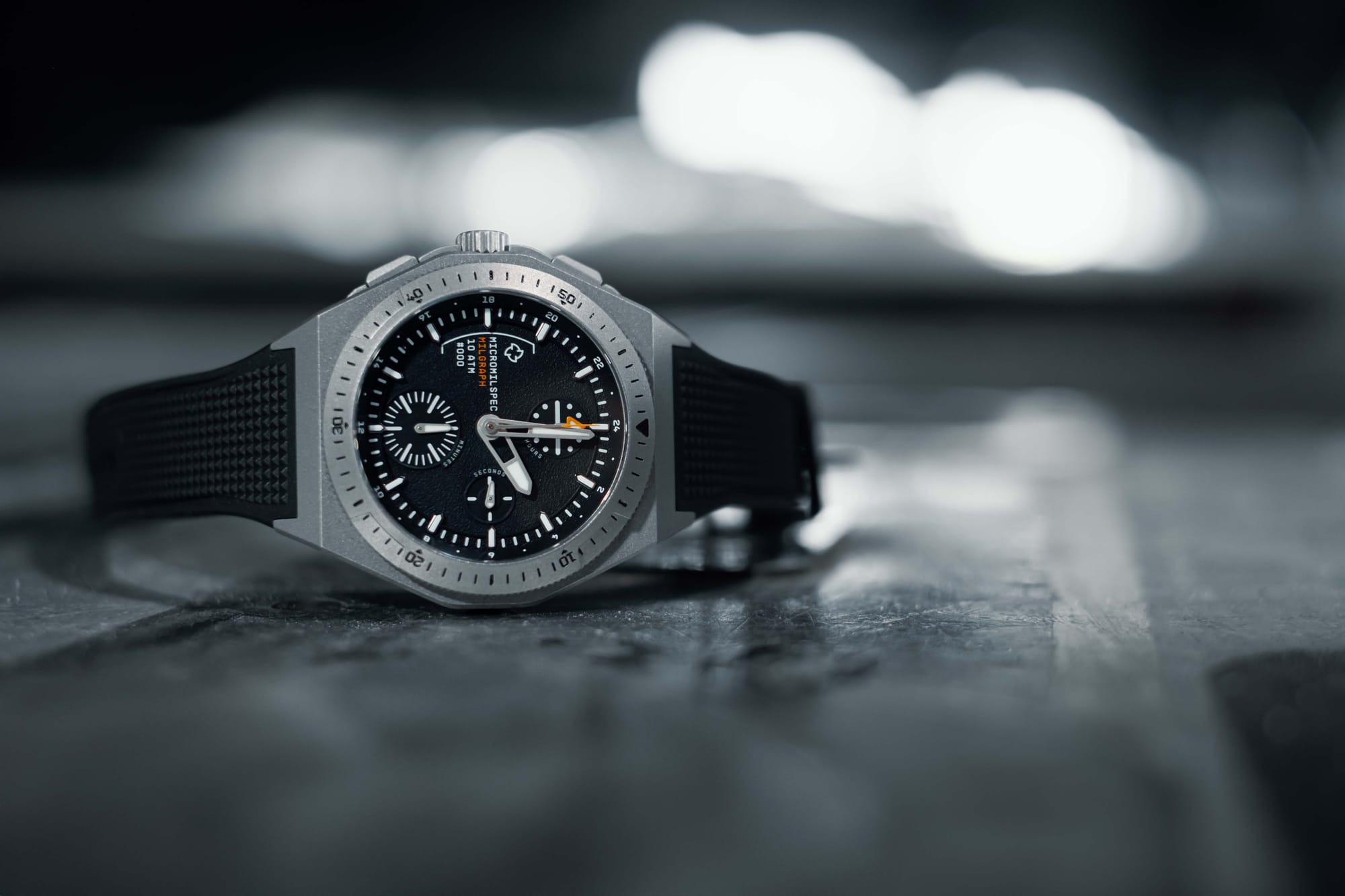
If you love rugged design, dislike fussy ornament, and want something you're statistically unlikely to see on another wrist, the Milgraph hits a very specific bullseye. It's a modern, field‑ready chronograph‑GMT in titanium with a left‑hand layout that actually benefits everyday wear on a left wrist. It's built by a company that treats civilian watches as a side effect of its military work, not a substitute for it. The price (~$3,850 base) makes sense once you factor in the movement choice and the build, and the waitlist scarcity feels earned, not engineered.
I bought it because it looks like serious equipment - and because I love the idea of a watch that's quietly rare for reasons other than celebrity demand. The Milgraph is that: a piece of issued‑level kit that found its way to the civilian world in small numbers. If you see one in the wild, you'll probably remember it. I suspect I'll be wearing mine hard enough to make sure of it.
References
- Independent coverage of LJP L121 (movement type and column‑wheel architecture). (Fratello Watches)
- Vacheron Constantin Overseas Dual Time "Everest" references: retail price and 150‑piece run; 41 mm case, 150 m WR; market listings for current values. (Hodinkee)
- Micromilspec Milgraph product page (2025, 2nd Edition): dimensions, 200 m WR, 75 pieces, movement specs, warranty, and Annual Collection delivery Q1 2026. (Micromilspec)
- Geneva Watch Days 2024 press page: launch context; 100 m/50 pieces; left‑hand crown rationale; QuadGrip bezel; "untraceable" mechanical positioning. (Micromilspec)
- Journal & company pages: founding (2019), first 330‑piece commission (RNoAF 330 Squadron), client roster, and "military first" mission. (Micromilspec)


