

I bought the Chronograph 68 in May 2025 after looking for a Massena LAB collaboration that felt special. The red, white, and blue subdials caught my eye, the run is limited to 99 pieces, and I paid CHF 2,086 on the secondary market. At list, it retailed for about 1,495 USD.
Brand history
Massena LAB focuses on collaborative, vintage-inspired projects. For this one, Massena partnered with Mathey-Tissot, a historic Swiss name now operating in the value segment. The Chronograph 68 is a period-style tri-compax design that riffs on late 1960s references, with modern specs and a limited production run.
Case and wearability
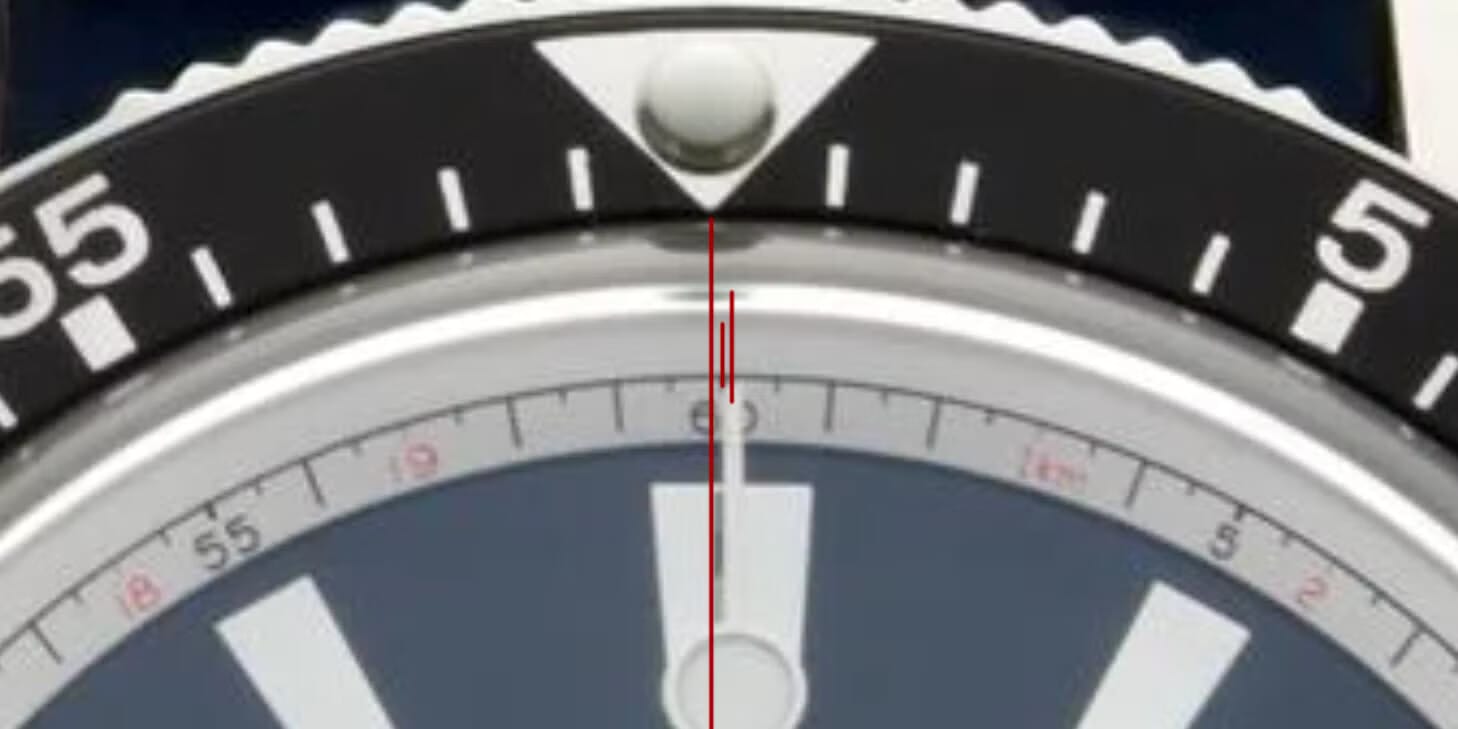
On my 7.5 inch wrist, the 41 mm case wears comfortably all day. The bezel overhangs the case slightly, which you notice in profile. The watch remains balanced and easy to wear. However, the rotating bezel is a weak point. It is unidirectional and does not feel secure, and it can sound metal-on-metal when tapped. Worse, it is not aligned to 12. Even in launch photos, the bezel is not centered, which makes the issue impossible to unsee once noticed. My chronograph seconds hand is also off at 12 o'clock, so the misalignment compounds. I cannot believe the watch went to market like this, and I cannot believe I missed it before buying. This feels like strong dial artistry paired with middling executive management execution.
Dial and aesthetics
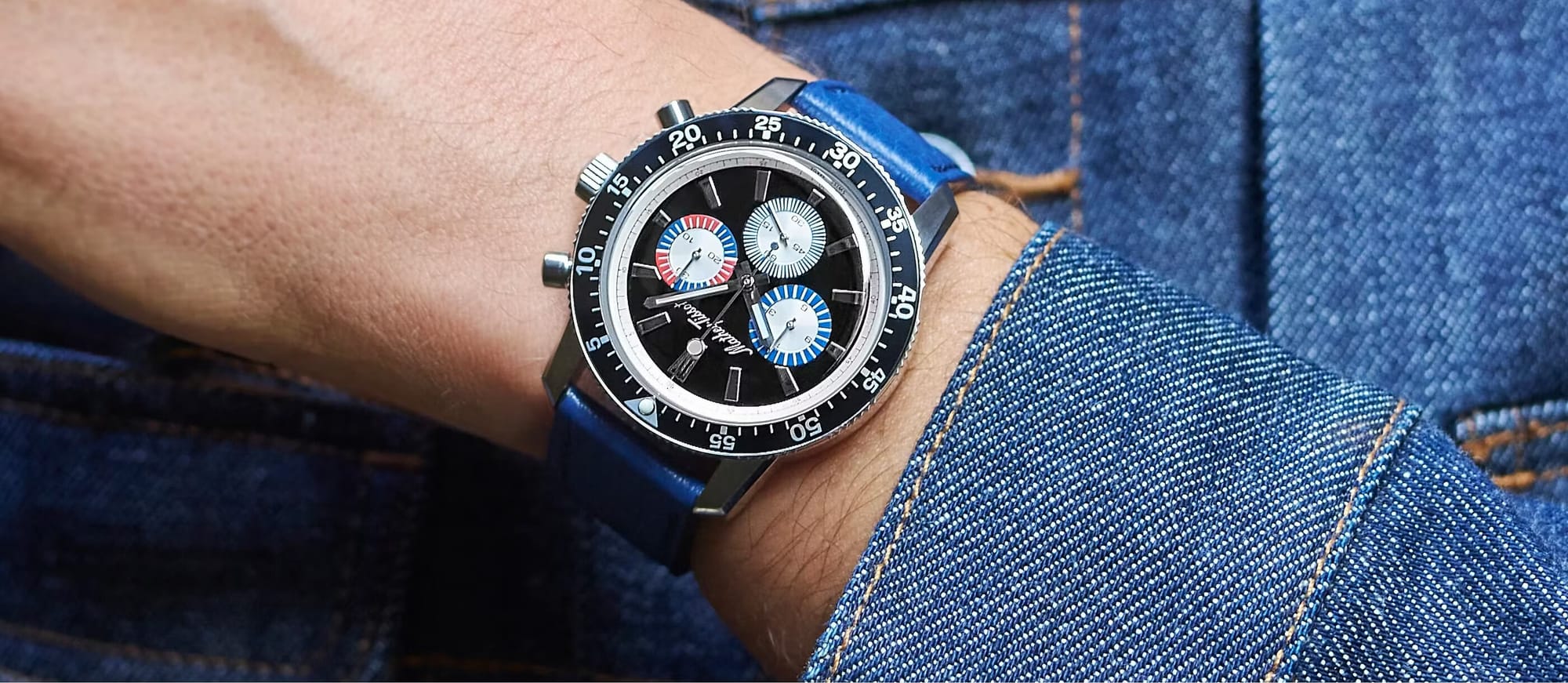
The dial is extremely legible. The colorful registers pop against the black base, and the AR-coated box crystal helps keep reflections in check. Daytime legibility is excellent. I have not tested lume at night, so real-world lume duration is unknown.
Movement and performance
Inside is the Swiss-made, self-winding Landeron 73 running at 4 Hz with a stated 43 hour reserve. In my watch, hand winding feels stiff for a watch that also auto-winds. Timekeeping has seemed fine in casual use, though I did not measure on a timegrapher. The chronograph pushers operate as expected and reset consistently, but the rotor is very present. It can feel like wearing a small gyroscope, and it is louder than I prefer. Based on this ownership experience, this will be my first and last watch with this 7750-style clone movement.
The strap
Mine came on a blue leather strap with a pin buckle, and I kept it. The strap suits the watch well, though it runs a bit short. The buckle is fine and unobtrusive.
Final thoughts
If you can buy one at a good price on the secondary market, it is a fun, eye-catching piece that earns compliments. But it is not a technological achievement. What you get is excellent design let down by QC and mechanical feel: a sloppy assembly, a noisy rotor, a stiff wind, a bezel that does not inspire confidence, and alignment issues that will bother detail-oriented collectors.
Alternatives?
- Vaer R1 USA Oceanracer Chronograph, Panda, mecaquartz VK63. Lower cost, visually interesting, and low-maintenance.
- Lorier Olympia.
- Nezumi Tonnerre, Ref. TQ2.202.
Specifications
- Case: 41 mm stainless steel, unidirectional bezel with luminous pip, 50 m water resistance
- Thickness and L2L: 13.3 mm thick, 48 mm lug to lug
- Crystal: Box mineral with anti-reflective coating
- Dial: Black with reflective hour markers, red/white/blue subdials, lollipop chrono seconds
- Movement: Landeron 73 automatic, 4 Hz, stated 43 hour power reserve, 28 jewels
- Strap: Blue calfskin, 20 mm lug width, stainless steel pin buckle
- Limited edition: 99 pieces
- Original price at launch: about 1,495 USD


