

I bought this watch because it came with a wooden box that turns into a gimbal mount. That's the truth of it. The watch is handsome, the history is real, the finishing is good for the money. But I'm writing this review while looking at it across the room, locked into its presentation case, because 46mm doesn't work on my wrist. This is a review about wanting to love something more than you actually wear it.
Hamilton's Naval History
Hamilton was founded in Lancaster, Pennsylvania in 1892. By World War II, the company had become the primary supplier of marine chronometers to the U.S. Navy. These weren't wristwatches. They were precision deck instruments, housed in wooden boxes with gimbal mounts to keep them level on rolling ships. Navigation depended on them.
The U.S. Naval Observatory asked American watch manufacturers in 1939 to participate in domestic chronometer production. Only Hamilton met Navy accuracy requirements. The company delivered its first two prototypes on February 27, 1942, with an error rate of 1.55 seconds per day. Hamilton went on to produce over 10,000 chronometers during the war: 8,900 for the Navy, 1,500 for merchant shipping, 500 for the Army.
The Smithsonian's plaque accompanying its Hamilton Model 21 reads: "These chronometers performed so well that they are in great demand wherever chronometers are used."
The Khaki Navy Pioneer 120th Anniversary exists because of that history. Hamilton released 1,892 pieces worldwide, matching their founding year. The presentation box doubles as a functional gimbal mount with a brass locking mechanism. Remove the leather strap, slot the watch into the holder, and you have something that looks like it belongs on a destroyer's bridge in 1944.
Case and Dimensions
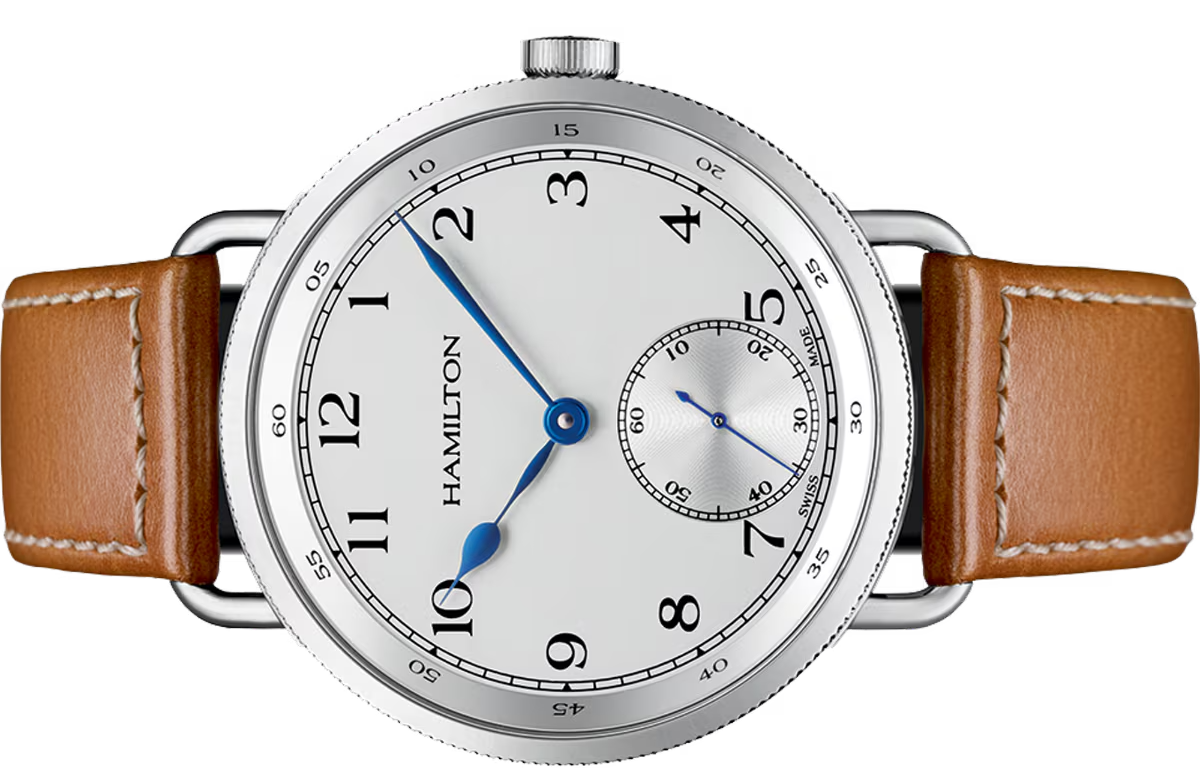
The case is 46mm. I'll say it again because the number matters: forty-six millimeters. At 11.95mm thick, it doesn't wear as heavy as the diameter suggests. The lugs curve down. Polished steel catches light in ways that feel more naval officer's quarters than tool watch. But 46mm is 46mm. On anything under a 7.5-inch wrist, this watch announces itself before you enter a room.
The size makes sense historically. Marine chronometers weren't worn. They sat in boxes. When Hamilton decided to make this piece wearable, they kept proportions closer to the original instruments than to conventional wristwatches. Whether that decision serves modern owners is another question.
Water resistance is 100 meters. The sapphire crystal is flat. Crown is signed and easy to grip.
Dial
Grey-ish. Not the white dial you'll see in most Hamilton Navy marketing. This anniversary edition went with a matte grey that reads almost silver in direct light and closer to slate in shadow.
Small seconds at six o'clock. Blued hands that actually shift color depending on angle. Arabic numerals throughout, sized for genuine legibility. Railroad-style minute track on the outer edge. Hamilton's logo sits below twelve, "Swiss Made" at six.
SJX noted in his 2012 hands-on that the dial and hands are "of high quality, higher than other Hamiltons of recent vintage. The dial printing is sharp and even, while the hands have a rounded profile and a deep blue colour."
The layout is pure deck watch. No date, no complications beyond the subsidiary seconds. Everything is where a 1940s Navy chronometer would put it. The font on the numerals looks period-correct without trying too hard.
Movement
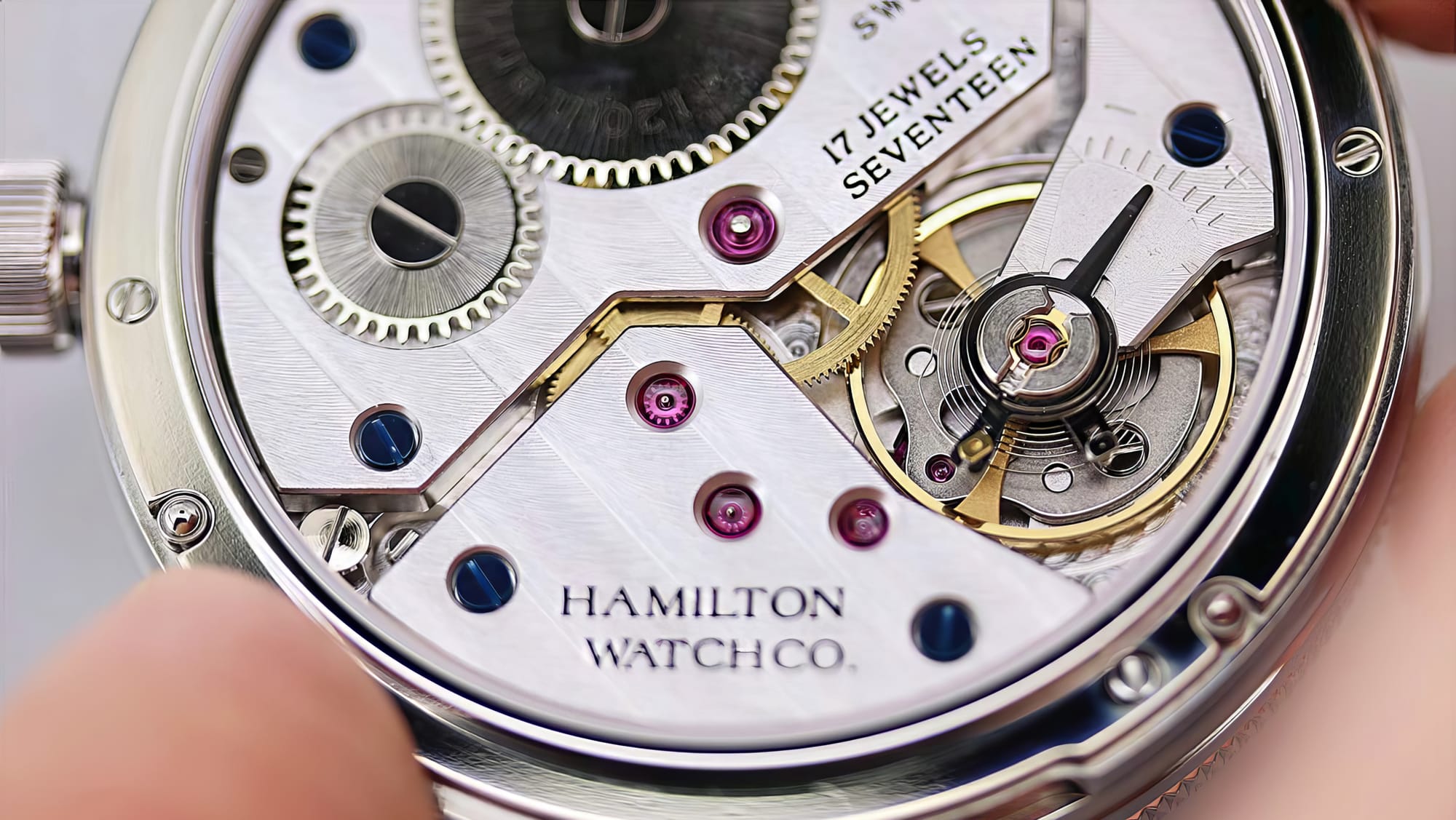
The ETA 6498-2 is a hand-wound movement originally designed for pocket watches. That explains why it fits comfortably in a 46mm case. The movement is 36.6mm in diameter.
Sixty-hour power reserve. No hacking. I wind it once and forget about it, so the lack of seconds-stopping isn't something I notice in practice. The exhibition caseback shows the movement decorated beyond what the price demands. Côtes de Genève on the bridges, blued screws. No rotor blocking the view because this is hand-wound. The architecture is clean and visible.
Hand-winding a watch daily sounds romantic until you own several. The 60-hour reserve means every two and a half days if you're not wearing it. Mine runs when I remember to wind it, which correlates roughly with how often I take it off the shelf to admire.
The Presentation Box
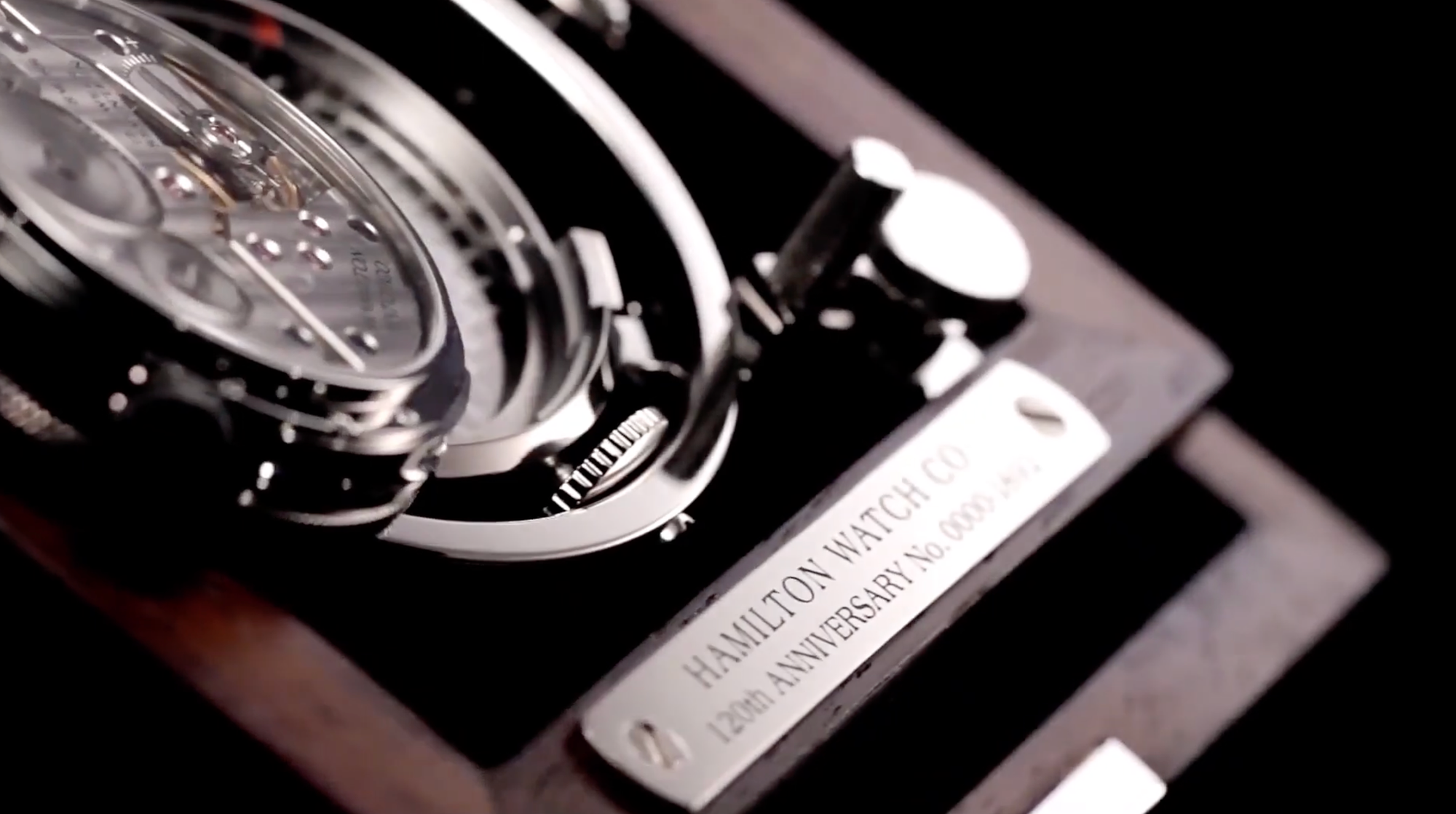
This is where Hamilton did something worth talking about. The wooden box isn't just packaging. It's a functional gimbal mount. A brass locking mechanism secures the watch body (without strap) into a cradle that pivots on two axes. Close the lid and you have a desk clock. A very large desk clock that happens to contain a Swiss mechanical movement.
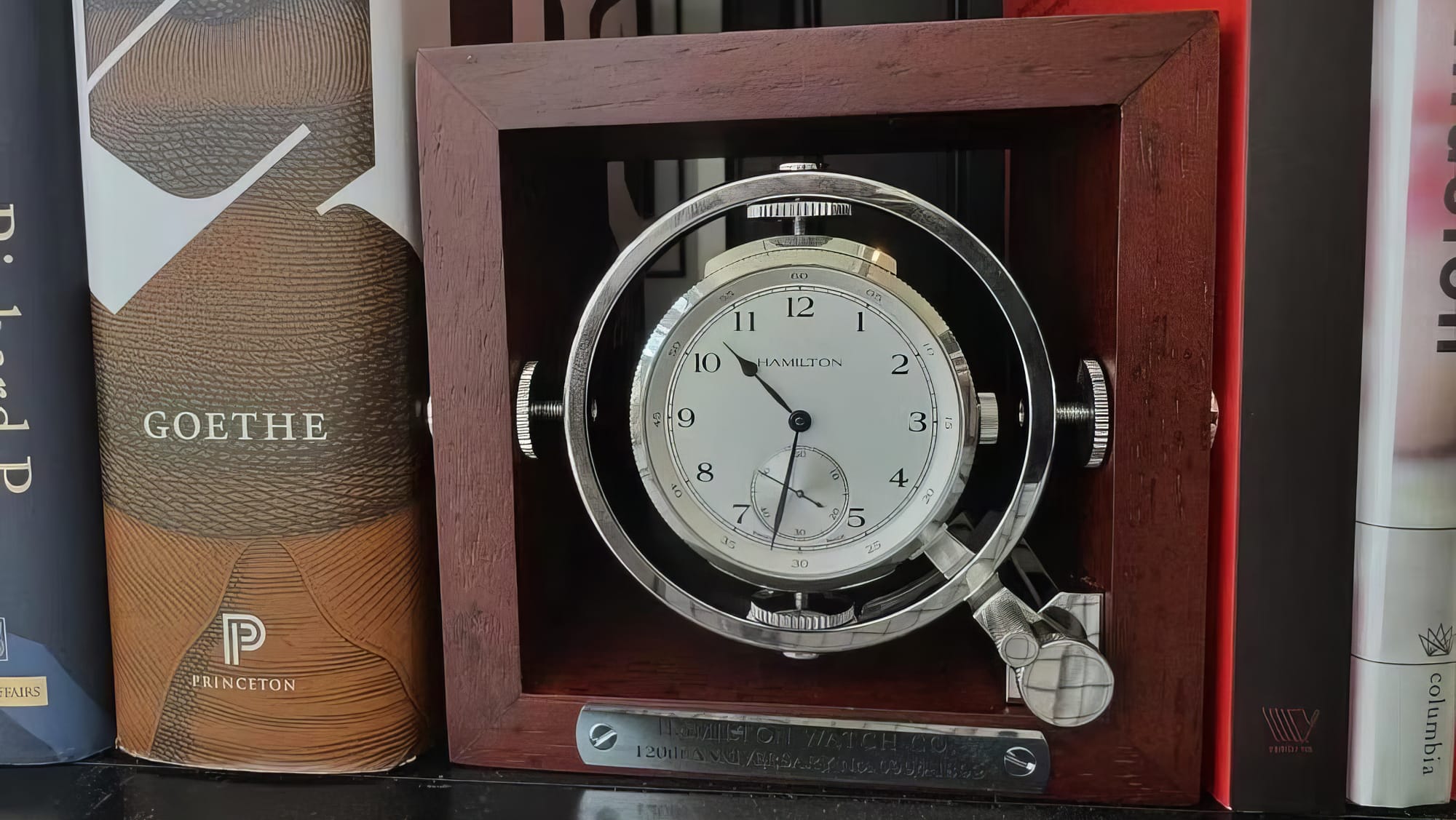
The leather strap and spring bars store in a compartment underneath. Hamilton thought through the dual-use concept completely. Most presentation boxes are garbage you throw away. This one is arguably the primary use case for the watch. I keep mine locked in the gimbal on my bookshelf. It looks better there than it ever did on my wrist.
On the Wrist
I wore this watch maybe a dozen times before it migrated to the shelf. The size overwhelms everything I own except the heaviest winter coats. It doesn't tuck under a shirt cuff. It barely fits under a sweater. The polished case catches every light source.
For someone with an 8-inch wrist and a taste for statement pieces, none of this is a problem. For me, it's a mismatch between what I wanted (that gimbal box) and what I can actually wear (not this).
The 22mm strap is comfortable. The calf leather Hamilton included is decent, nothing exceptional. The pin buckle is signed. None of that matters if the case makes your arm look like it's being eaten.
Verdict
The Hamilton Khaki Navy Pioneer 120th Anniversary is a beautiful object that I cannot recommend as a daily watch for most wrists. It's a better desk clock than wristwatch. Hamilton might disagree, but the gimbal box suggests they knew what they were building.
If you have the wrist for 46mm, if you appreciate hand-wound movements with pocket watch DNA, if the naval chronometer aesthetic speaks to you, this is a solid anniversary piece. The 1,892-piece limitation means something because the number means something. The box works. The movement is proven. The dial is correctly proportioned for the case.
I keep mine on the shelf. It's the most expensive desk clock I own, and I don't regret buying it.


