

The Tudor North Flag (Ref. 91210N) was a big deal when it launched in 2015. It was the first Tudor to use an in-house movement, the MT5621, which meant the brand was no longer just buying movements from ETA. For a company that had spent decades as "affordable Rolex," this was Tudor saying it could build the whole thing itself.
The Tudor legacy
Hans Wilsdorf founded Tudor in 1926 as a more accessible alternative to Rolex. For most of its history, Tudor used third-party movements, mainly ETA calibers, while building a reputation for tough, reliable tool watches. Military units and professional divers wore them.
In the early 2010s, Tudor started pushing for its own identity. The Heritage line revival in 2012 reminded people that Tudor made good watches at reasonable prices. By 2015, Tudor was ready to prove it could do more than assemble other people's parts. The North Flag was that proof.
Why Tudor went in-house
Developing an in-house movement let Tudor:
- Stop depending on Rolex or ETA for calibers
- Compete with Omega and Breitling, which already had their own movements at similar price points
The MT5621 offered a 70-hour power reserve (most ETAs give you about 40) and a silicon hairspring for magnetic resistance. The movement also has a power reserve indicator at 9 o'clock, something you rarely see at this price.
The watch feels solid in a way that's hard to pin down. The case, dial, bracelet, and movement were all designed together for this specific model, and you can tell. Nothing feels borrowed or adapted.
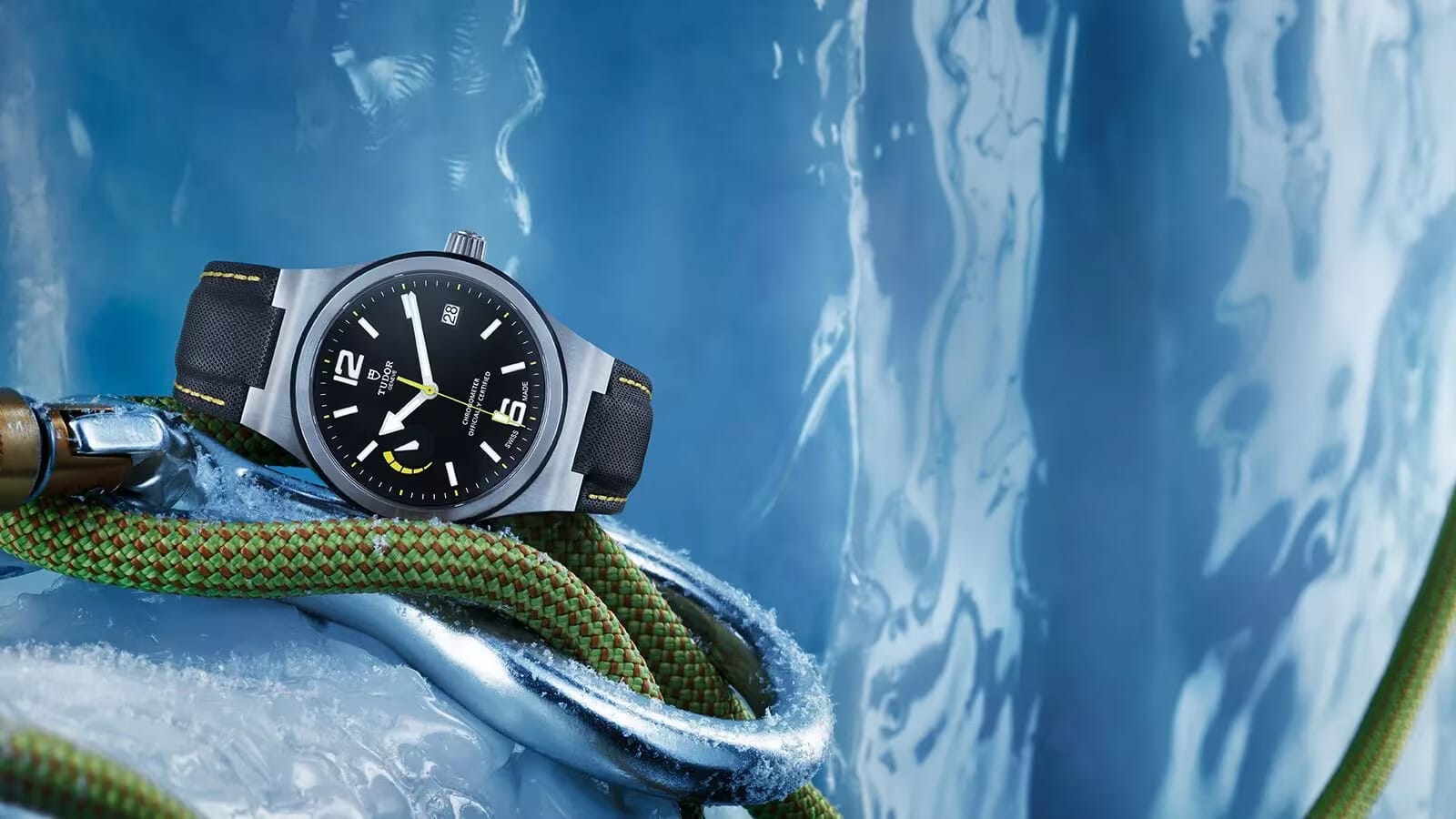
Why was the North Flag discontinued?
Tudor killed the North Flag in 2021, which surprised people given its historical importance. A few possible reasons:
The design divided opinions. The industrial look with the yellow accents wasn't for everyone. Tudor's vintage-inspired pieces like the Black Bay sell better.
The integrated bracelet and ceramic bezel probably cost more to manufacture than simpler Black Bay components, though Tudor hasn't confirmed this.
Whatever the reason, the short six-year production run has made the North Flag more collectible. It was an unusual experiment for Tudor, and experiments don't always get long production lives.
Technical details
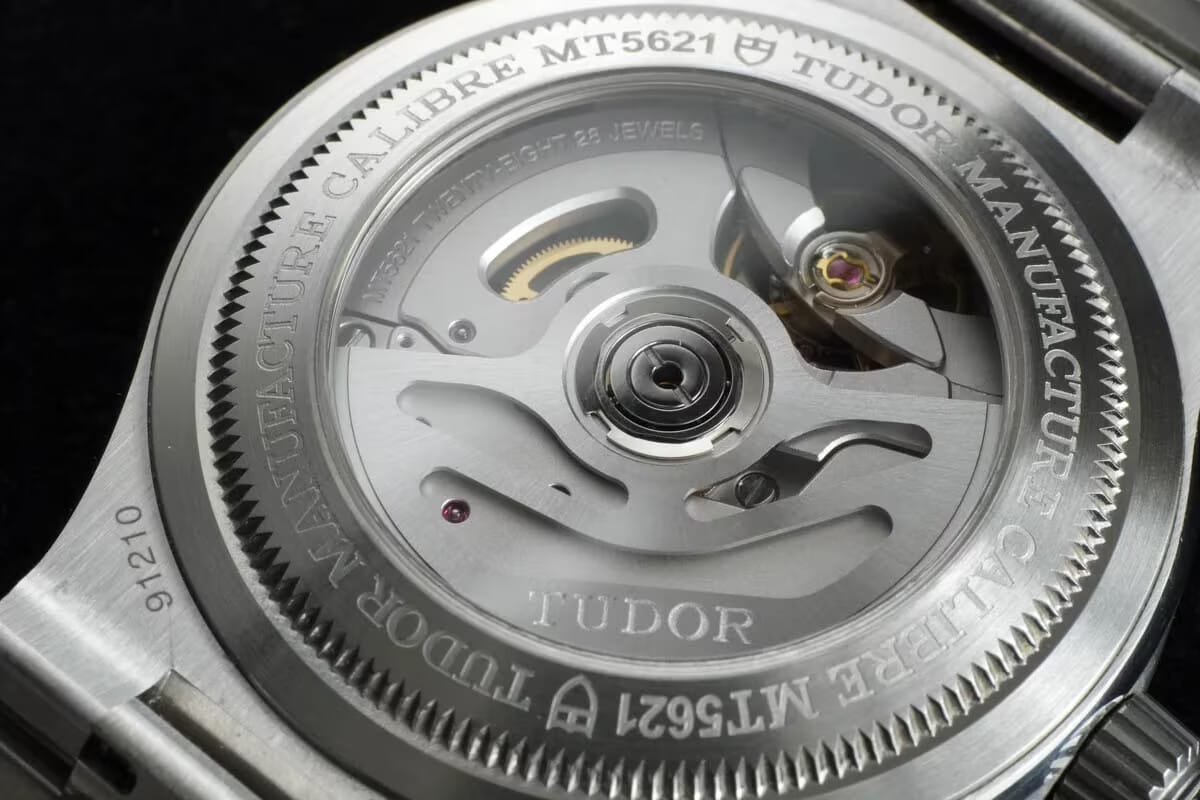
Movement: MT5621
- COSC-certified chronometer
- 70-hour power reserve (a full weekend off the wrist)
- Silicon hairspring for magnetic resistance
- 28,800 vph (4 Hz)
- Power reserve indicator at 9 o'clock
Case and dimensions
- Brushed stainless steel with polished accents
- 40mm diameter
- 13mm thick
- Brushed steel bezel with ceramic insert
- Sapphire crystal with anti-reflective coating
- Exhibition caseback (another first for Tudor)
- 100m water resistance
Bracelet
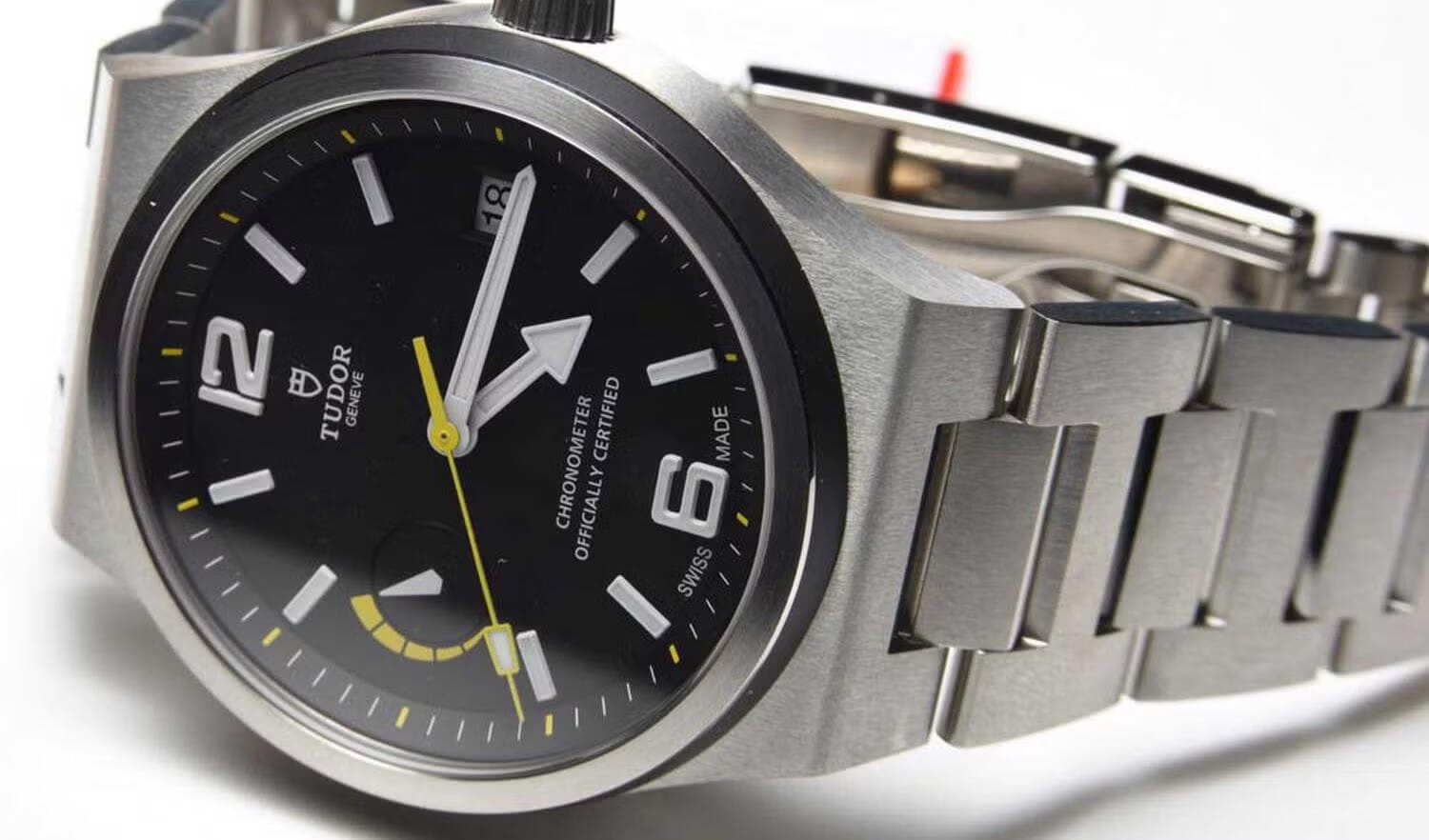
- Integrated design that flows into the case
- Folding clasp with safety catch
Swapping straps is annoying because the 12mm spring bars are easy to scratch. But the watch looks good on both the steel bracelet and the black-and-yellow leather strap, so you'll probably want to switch between them. The yellow accent is polarizing, but I like it. It gives the watch a certain expedition-instrument character.
When I first handled the North Flag, I understood immediately why people get attached to it. It was the first and only Tudor I've owned.
Collectibility
The North Flag matters because it was Tudor's declaration of independence. Before 2015, Tudor was a parts-assembler with a famous parent company. After the North Flag, Tudor could point to something entirely its own.
Collectors also connect it to Tudor's exploration heritage, specifically the Oyster Prince watches worn during the 1952 British North Greenland Expedition. Tudor never explicitly marketed that connection, but the rugged DNA is there.
Britt Pearce called it a future classic, and I think she's right. Watches that mark genuine turning points tend to appreciate once people realize what they were.
Bottom line
The North Flag didn't sell as well as the Black Bay or Pelagos, probably because that industrial aesthetic isn't for everyone. But it represents something real: Tudor's first in-house movement, first exhibition caseback, and a willingness to try something that didn't look like the rest of the lineup.
If the design works for you, it's worth tracking one down. Production ended in 2021 and prices have been climbing since.


